Loading cart contents...

THE BOOK OF HOURS AND BREATHS
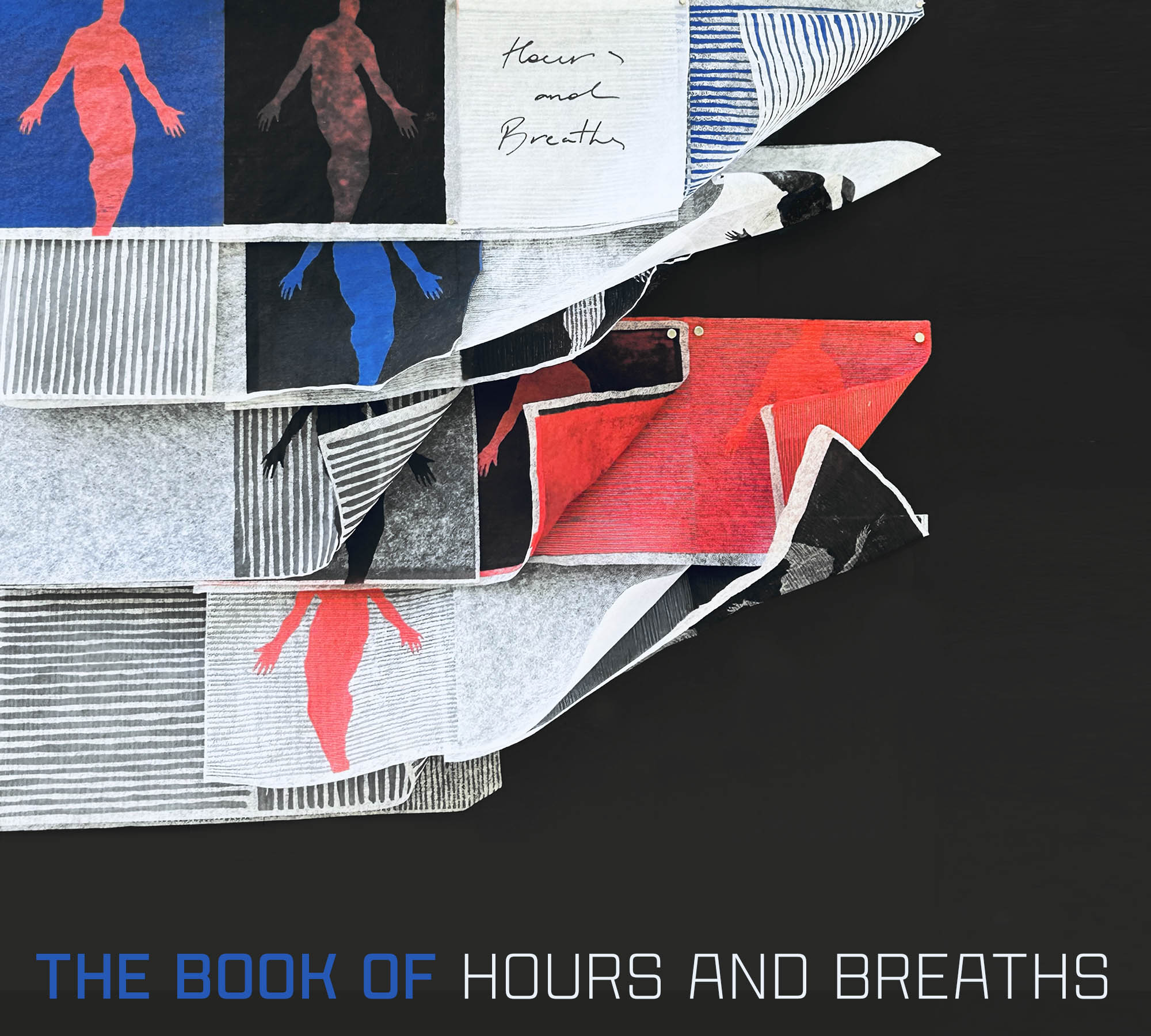
Sensing the World
through a Book.
One year in the making.
There are things you can only sense – like the weight of an object that has absorbed twenty-four hours of work. The grain of paper recording the drift of a wrist when the body is spent, and knows it. The difference between a mark made afresh and a mark made when the focus drifted. These minor gestures are the argument for my Book of Hours and Breaths.
This is a handmade artist book one year and half-a-lifetime in the making, technically a culmination of my MRes in Philosophy and Art Theory Studies at the Central Saint Martins, UAL. The year matters as substance, long enough for a project to teach something new and valuable. It is not long enough to forget the cost. This project is about the layers and duration, the joys and laments in the book form.
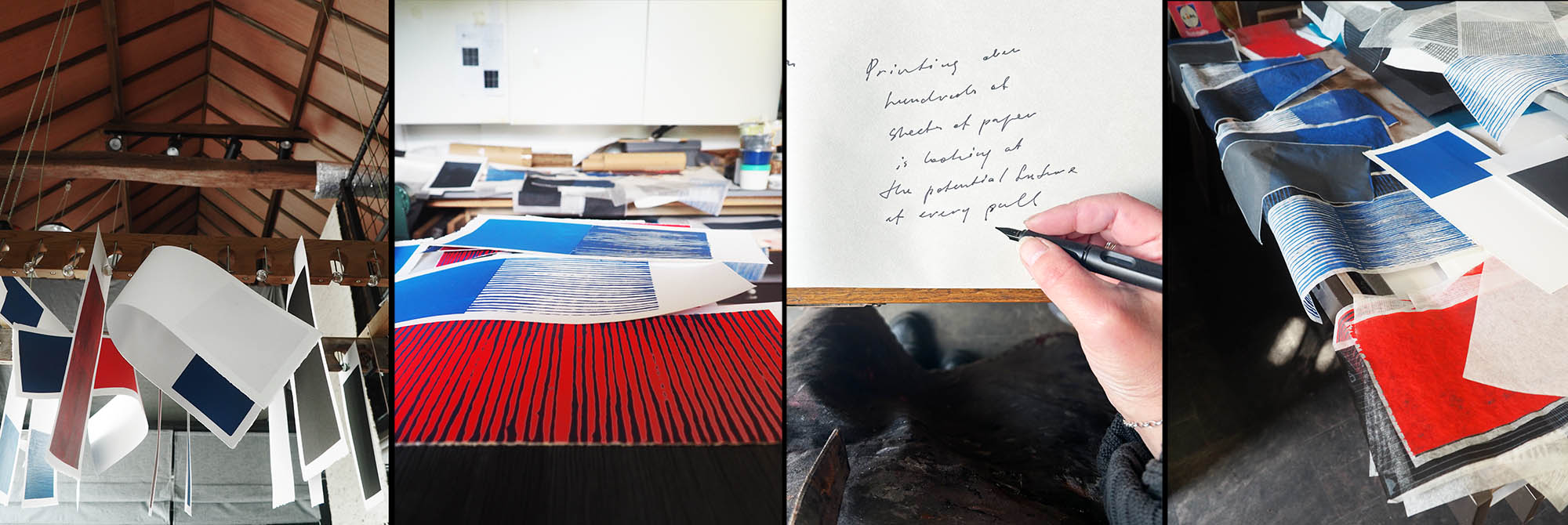
The project begins with a Print Vigil: twenty-four uninterrupted hours at my studio, with my intaglio and silkscreen presses. One body, one studio, one full turning of the earth. To make is to enact thinking, and my presses think in their own register – in pressure, resistance, layer, drift – generating knowledge that words can only circle. Touching, at a tangent, the inexpressible realities, in the fullest sense: things fundamental to grasping life and its processes, things the body holds before language arrives.
The book that emerged was tried and tried again at the press, until its dimensions displaced roughly 1000 millilitres – the volume of a deliberate deep human breath. When you lift it, you sense this. When you sense it, you grasp it. The deep breath: the lung is the measure of the architecture, the sensory relay starting with the touch.
We live, most of us, inside systems designed to make sensing invisible. The screen offers no resistance; the interface records nothing of the body’s cost. What diminishes, quietly and by design, is our capacity to feel what is happening to us – the knowledge that arrives in the wrist before it arrives in language, the intelligence the body generates in companionship with resistant matter: ink, paper, the weight of the roller, the weight that the hours of a printmaker are made of.
The Book of Hours and Breaths draws on the medieval Book of Hours – a small archaic devotional manuscript made when thinking and making moved together before progress forced a split identity on them. Held in the palm, warm from the body that read through them, those elaborate books built attention hour by hour through sustained contact with material. The Print Vigil enters that inheritance without nostalgia, yet with urgency, as necessity, as a second darkness called into the first.
The project is scored as a Boxed Breath – a four-part orchestration shaped by the body’s own rhythm: Inhale (the written philosophy), Hold (the artist book), Exhale (Animations and Lexicon, the writing generated through the canonical hours, the language the Vigil revealed), Rest (the studio archive, the duration held in notes, photos and videos). Each part does what the others cannot reach. Together they constitute one event – sensory and rational in equal terms.
A year of making generates its own dramaturgy. The slow building of the philosophical method. The archives. The designs. The physical vigil. Layering the images on the press, mirroring the breath in each pull and reveal. The weeks of binding and editing. The artist book arriving at its final weight in the hand. Process and outcome – inseparable. The work is the research. The research is the work.
What we can no longer get from systems designed to conceal the body’s intelligence, we ask of one another. And we strive to provide. One body spent a year making a book your hands can hold for the duration of a few breaths. The body can sense that weight before your mind has named what it is sensing.
The somatic relay – the sensory measure that passes between bodies – works through the touch and the objects we make and share.
enacting thinking · sensing the world · companionship with resistant materials
aesthetic and epistemological in equal terms · dramaturgy of the body
The body is yours.
The book is communal.
BoH Bottom Picture