Loading cart contents...

THE BOOK OF HOURS AND BREATHS
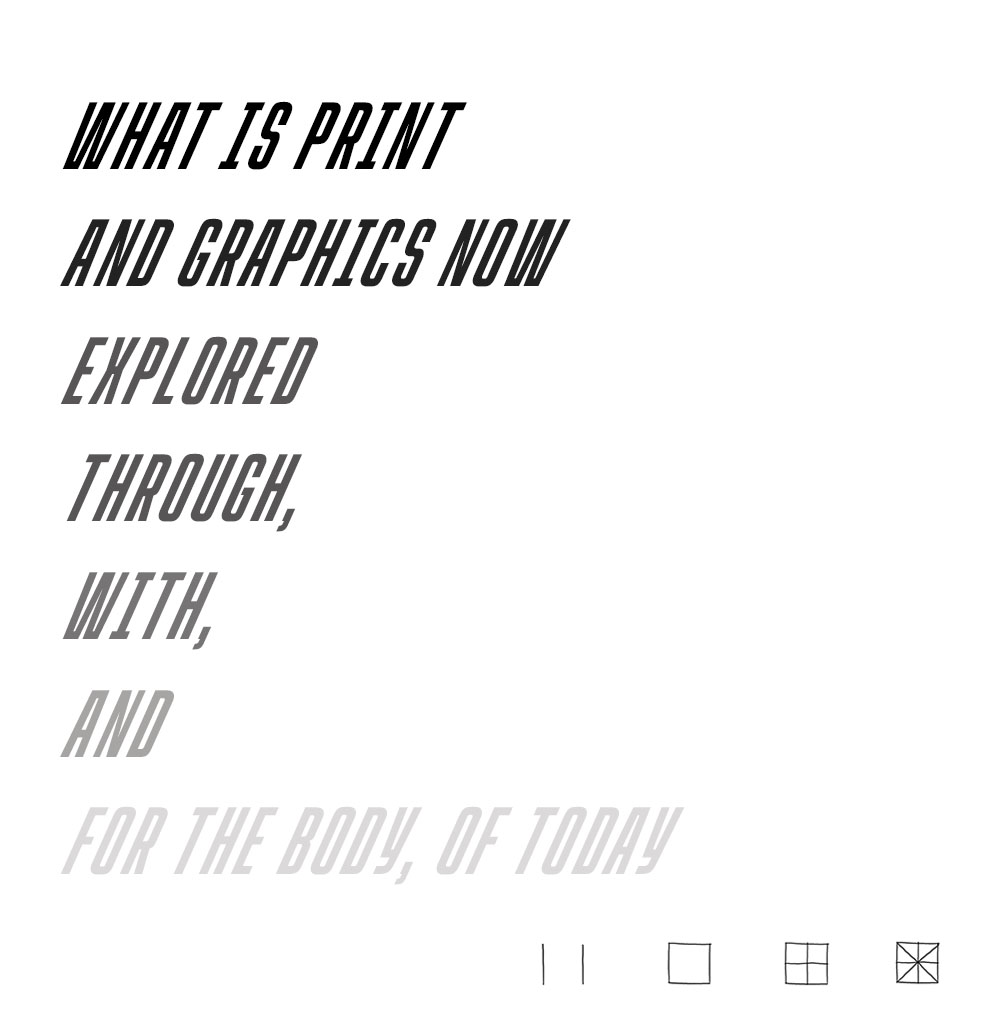
A 24-hour event. A 1,000ml breath. A book measured in both.
You already know how much a breath weighs. You just haven’t thought about it recently.
The hands, the body, the ink, the paper, the studio, the idea. The Book of Hours and Breaths is what happened when an artist stayed focused long enough — twenty-four uninterrupted hours — for the work to stop being applied and start being lived.
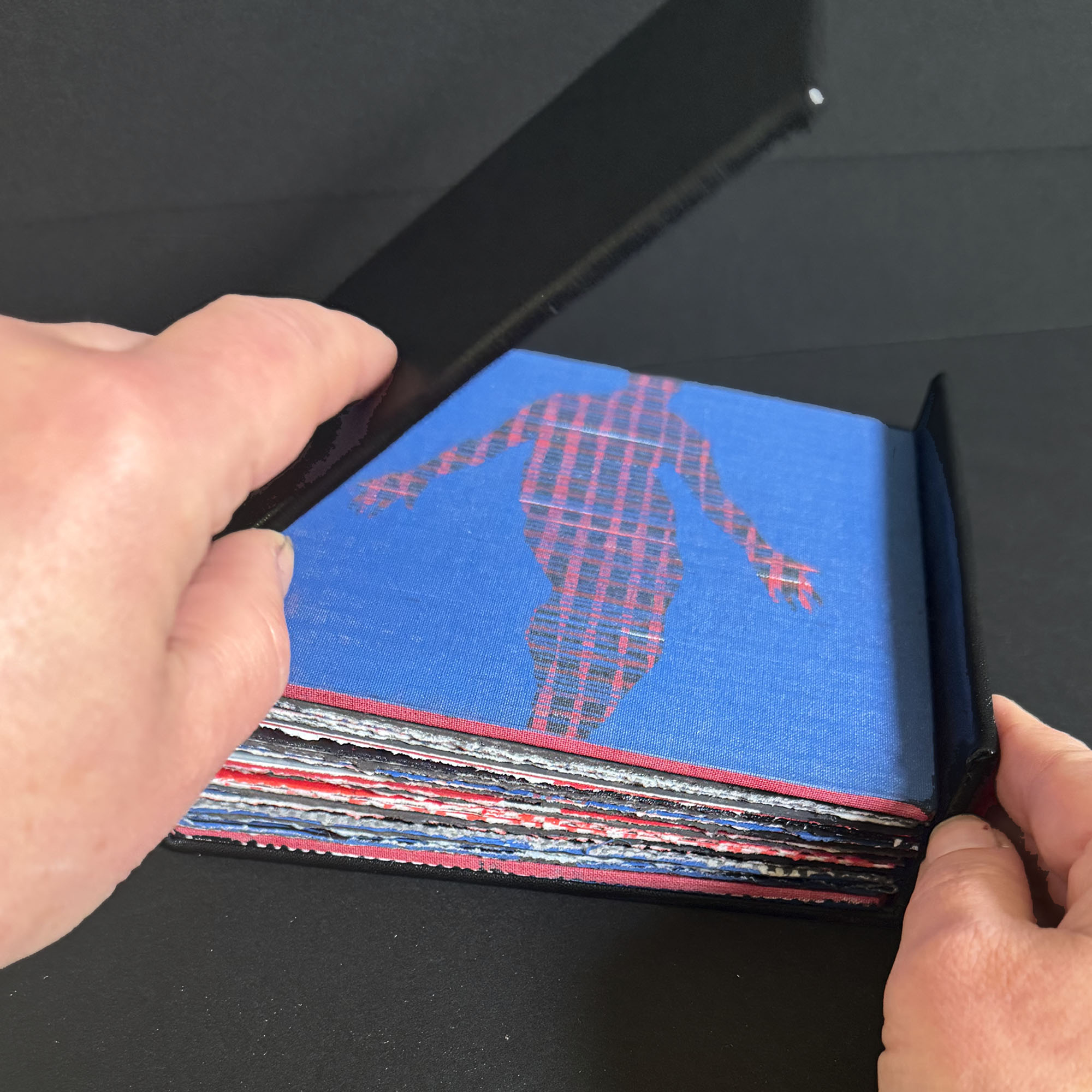
It is a handmade artist book, one year in the making and twenty-four hours at the press. Its dimensions were calibrated until the physical volume of the object matched the capacity of a single deliberate inhalation: 1,000ml. The lung became the measure of the architecture. When you hold it, you sense something has been deposited there that no image can reach.
It takes its structure from the medieval Book of Hours — those small, handmade devotional manuscripts designed to move with the heat of a palm, to bind the rhythm of the day to the rhythm of the body. A contemporary continuation: a book that carries the body’s passage through time in the same register the medieval manuscript carried prayer.
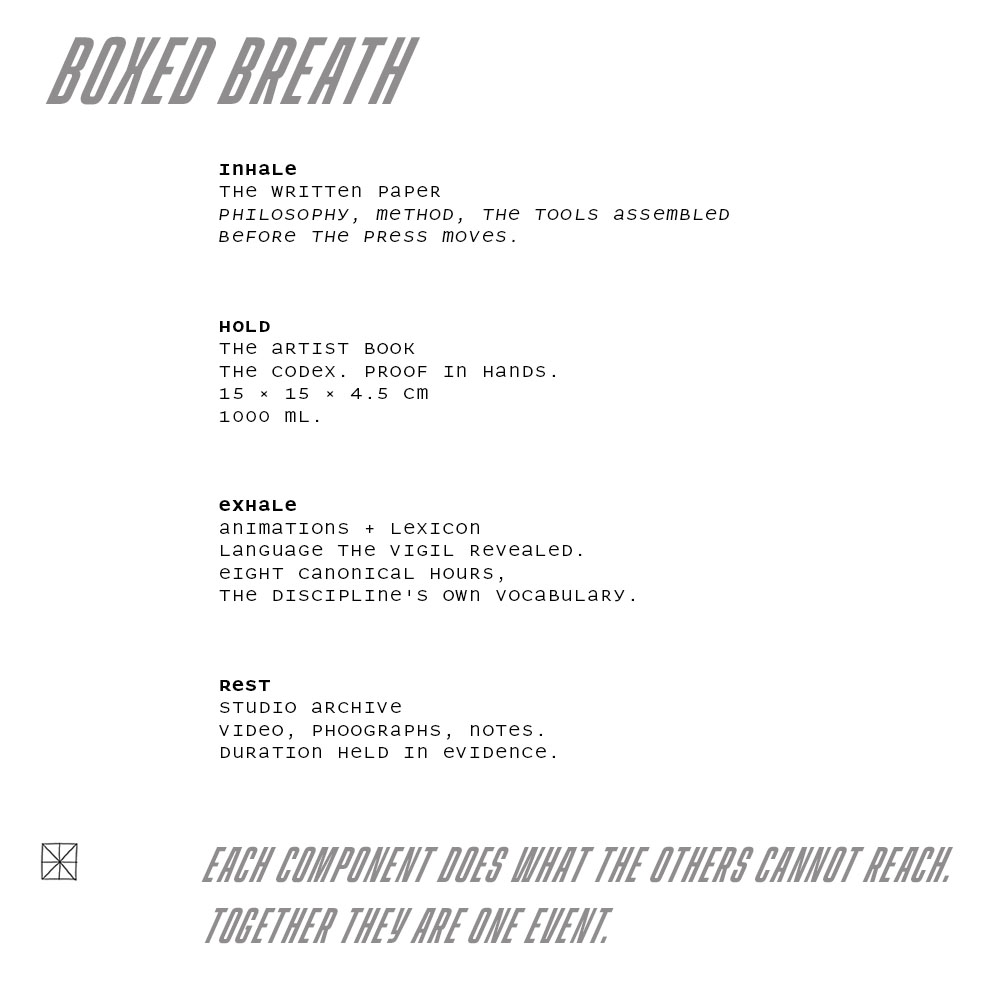
It is also a piece of research — into what devoted practice at the press generates that other ways of working cannot. Into what practice and language discover together, at the press, under pressure, in the hours that won’t stop accumulating. The written paper, the Animations, the Lexicon, the studio archive — evidence of the same event, held in four different forms.
.
The body already knows this structure. Inhale, Hold, Exhale, Rest — four equal intervals that regulate the autonomic nervous system, returning it to equilibrium under stress. The project is built on the same ratio. As working logic.
.
Essay
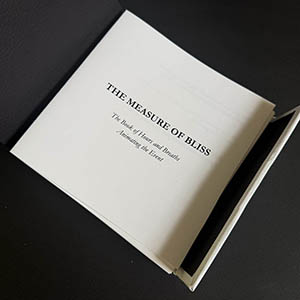
The philosophy that moves with the press. This is the thinking that assembles the tools — tracing what the digital interface withholds from the sensing body, summoning the medieval Book of Hours as a ghost-map to what devoted practice felt like from the inside, building the architecture of attention that makes the Vigil possible.
Three frameworks do the work: Spinoza’s substance monism — that thinking and making are the same event in one substance, apprehended twice; process philosophy’s insistence that nothing is inert, everything is in relation and becoming; and affect theory’s claim that the body knows before language does.
The argument in full. Read it first, or read it after. It will be different both times.
The Artist Book
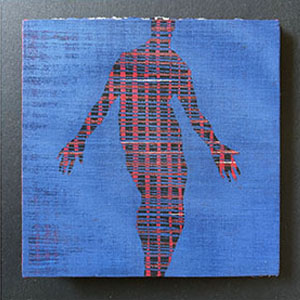

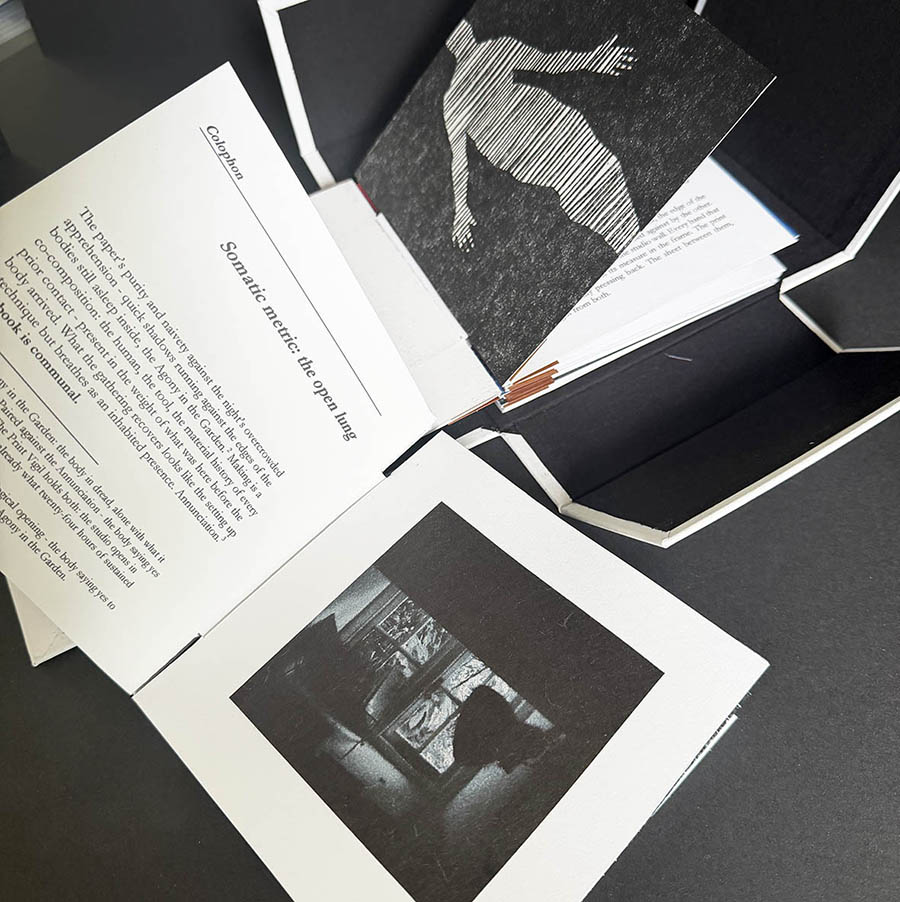
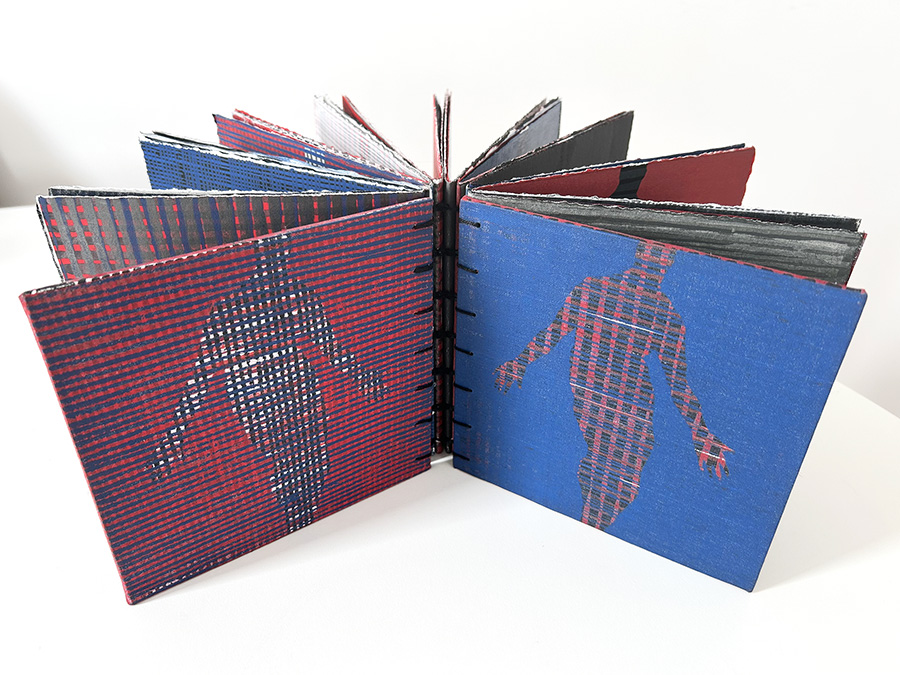
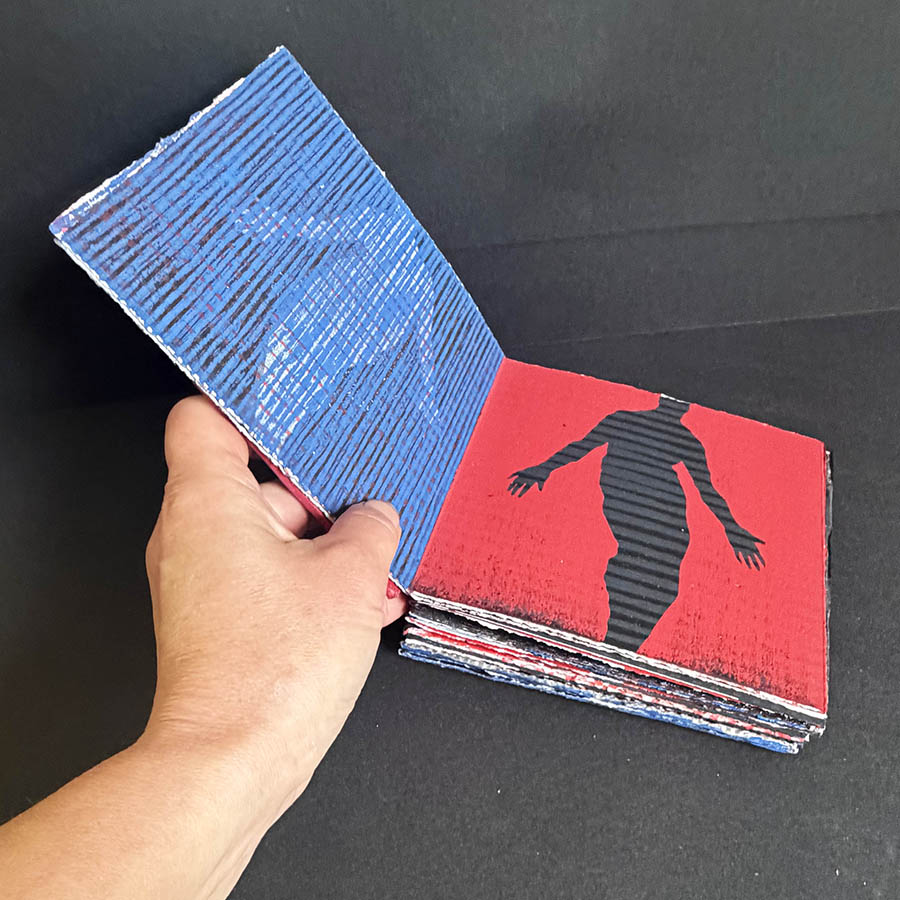
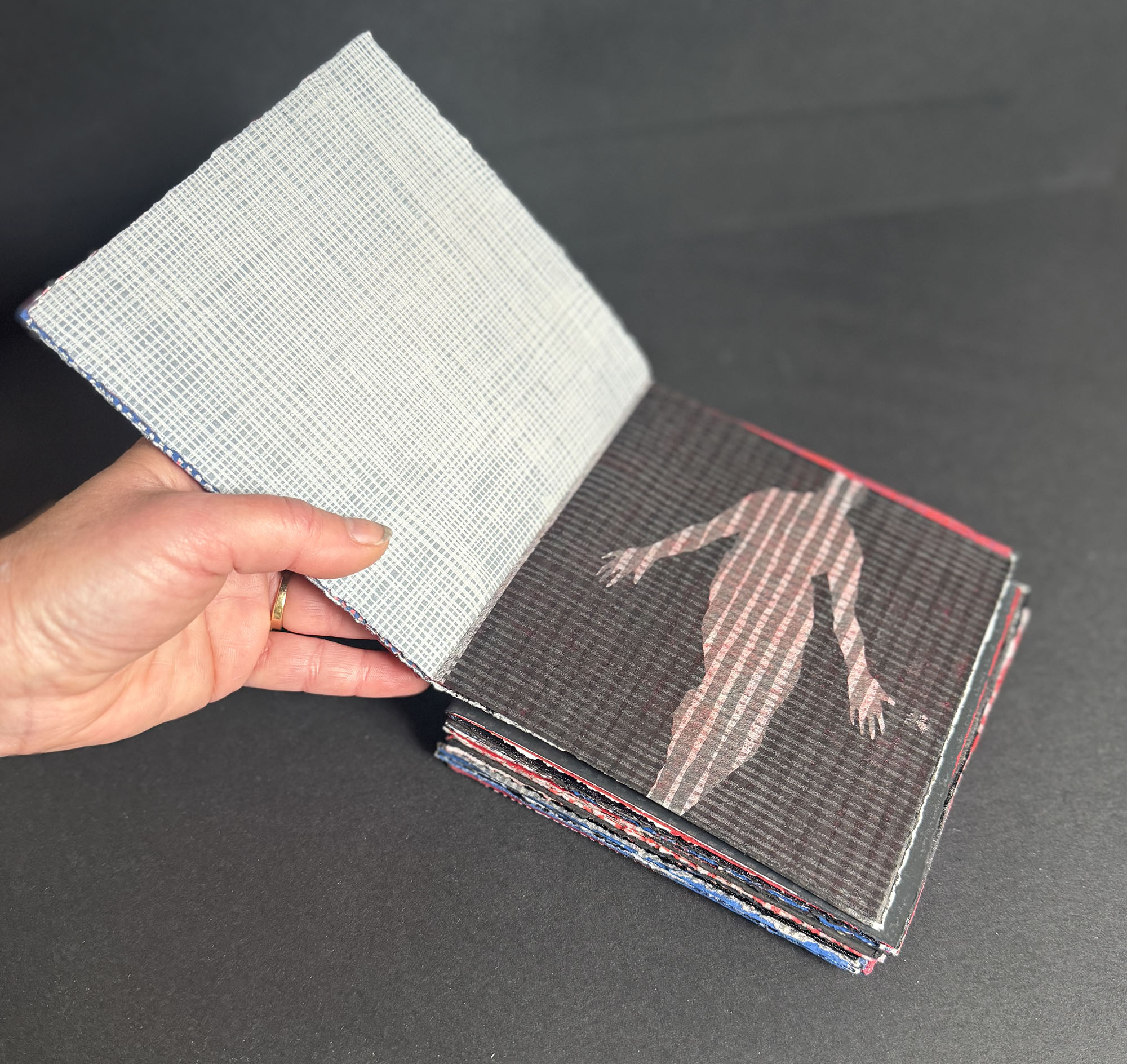
The codex carries no text. It is not informational — it is print, painting, and sculpture simultaneously. Senseware: an object that acts on the body before it delivers anything to the mind.
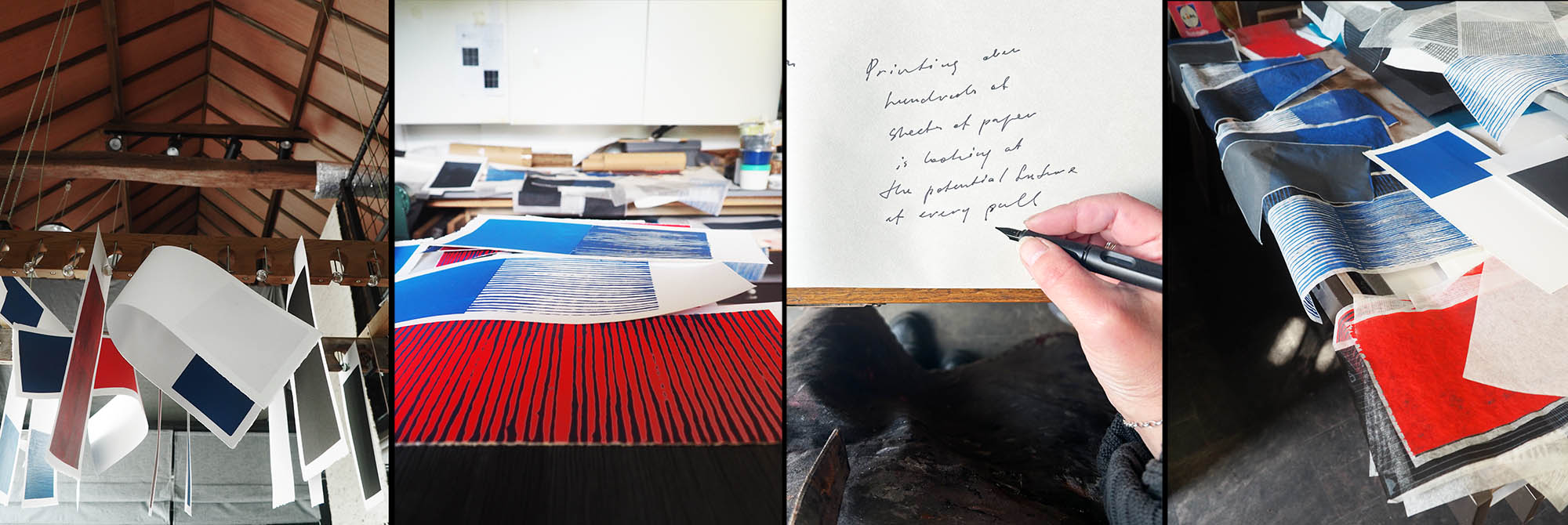
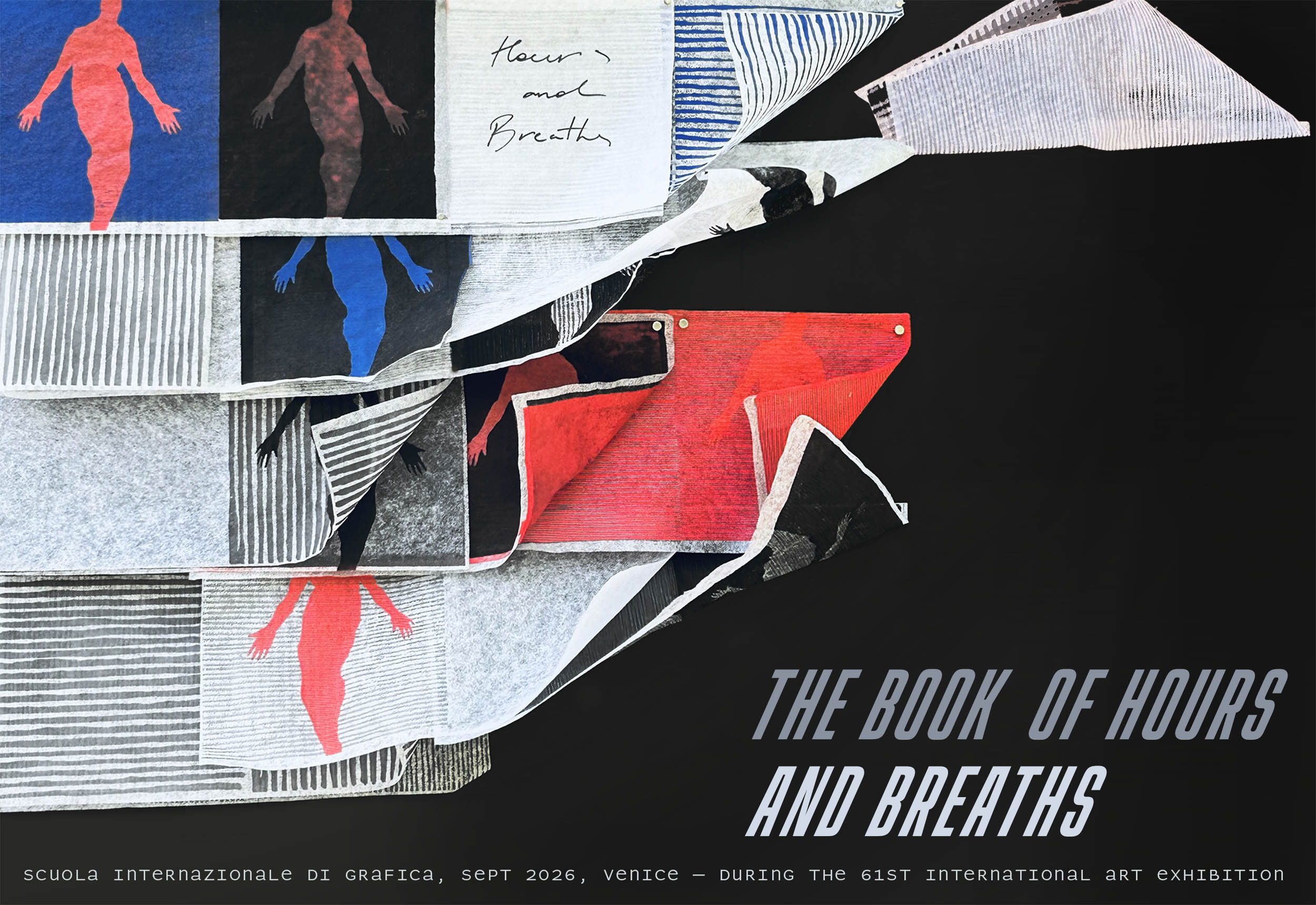
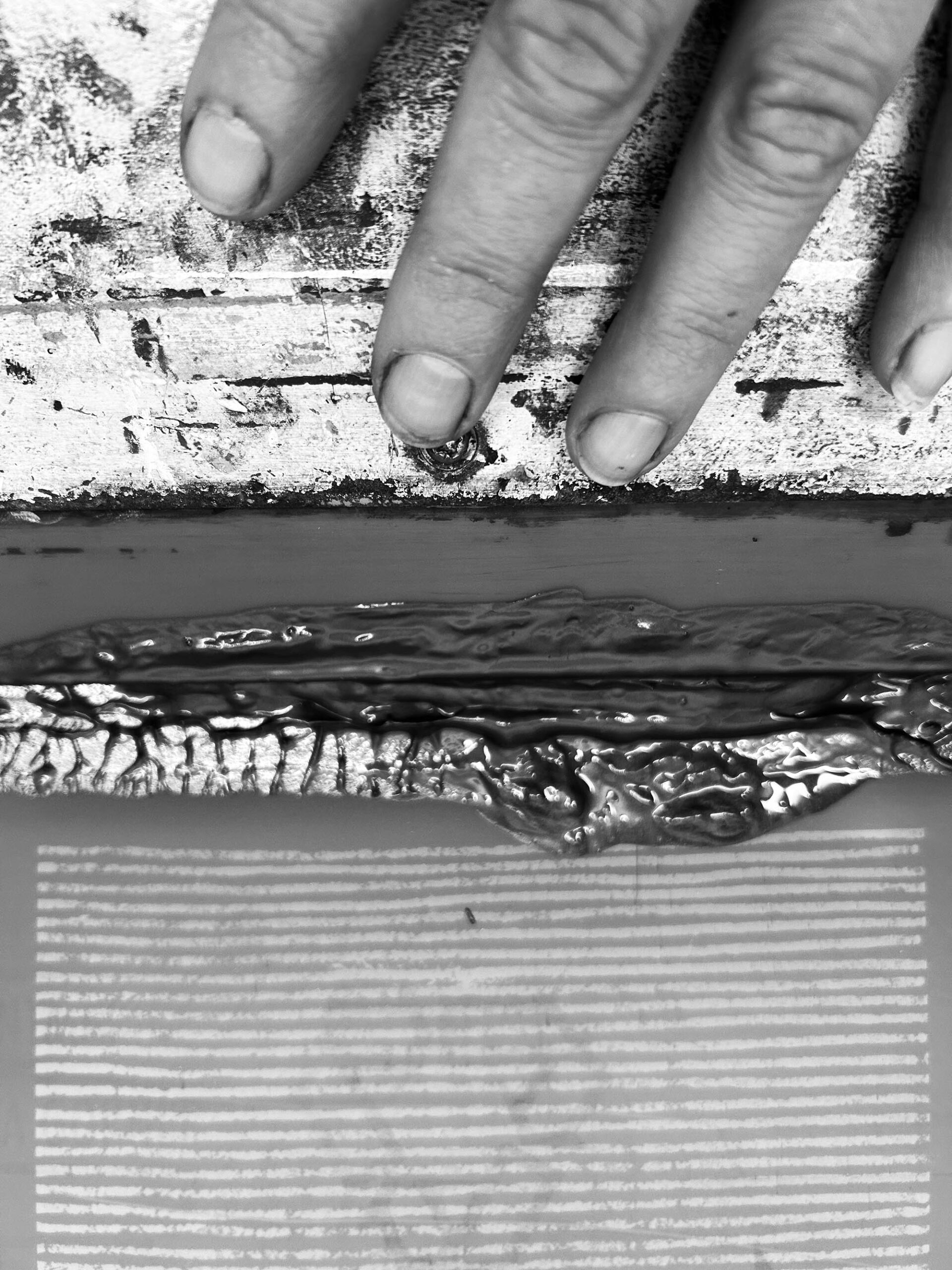
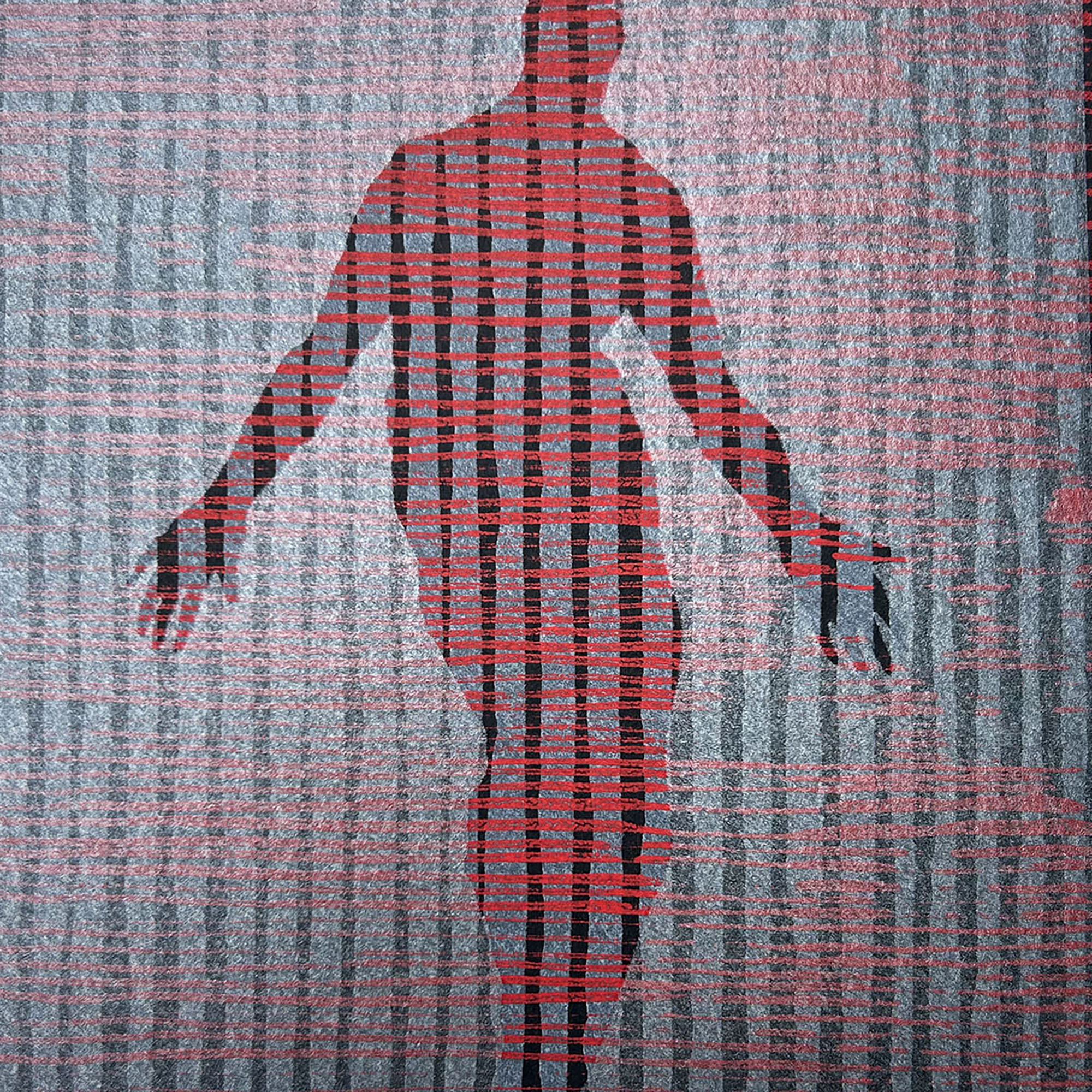
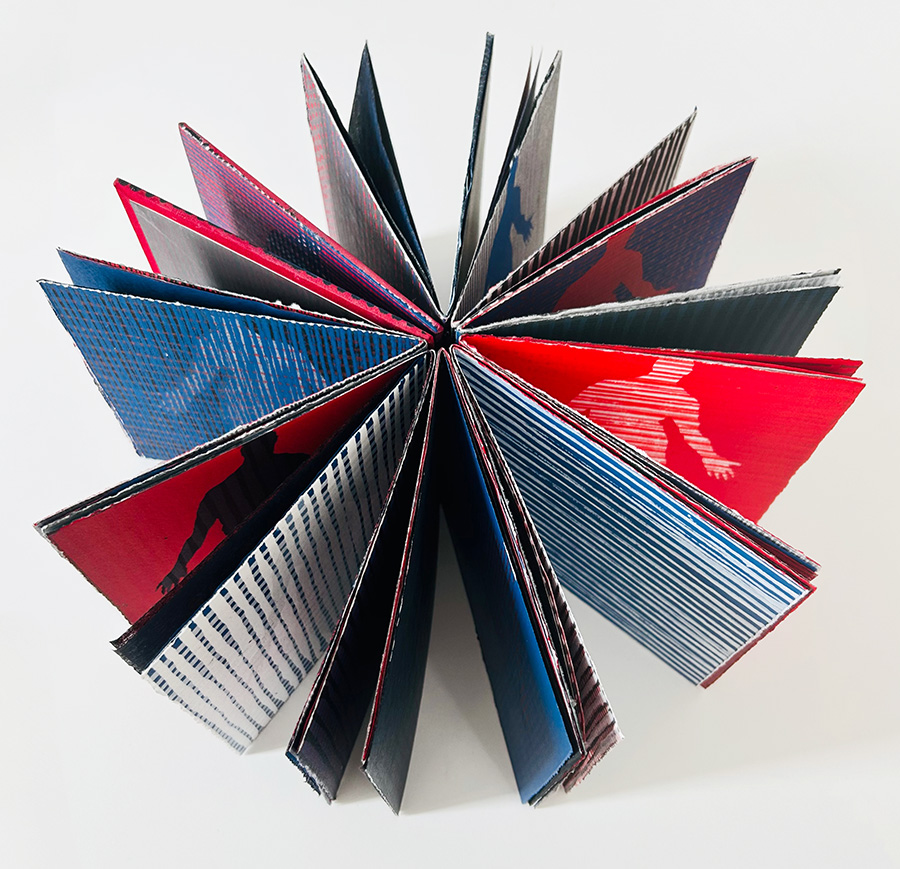
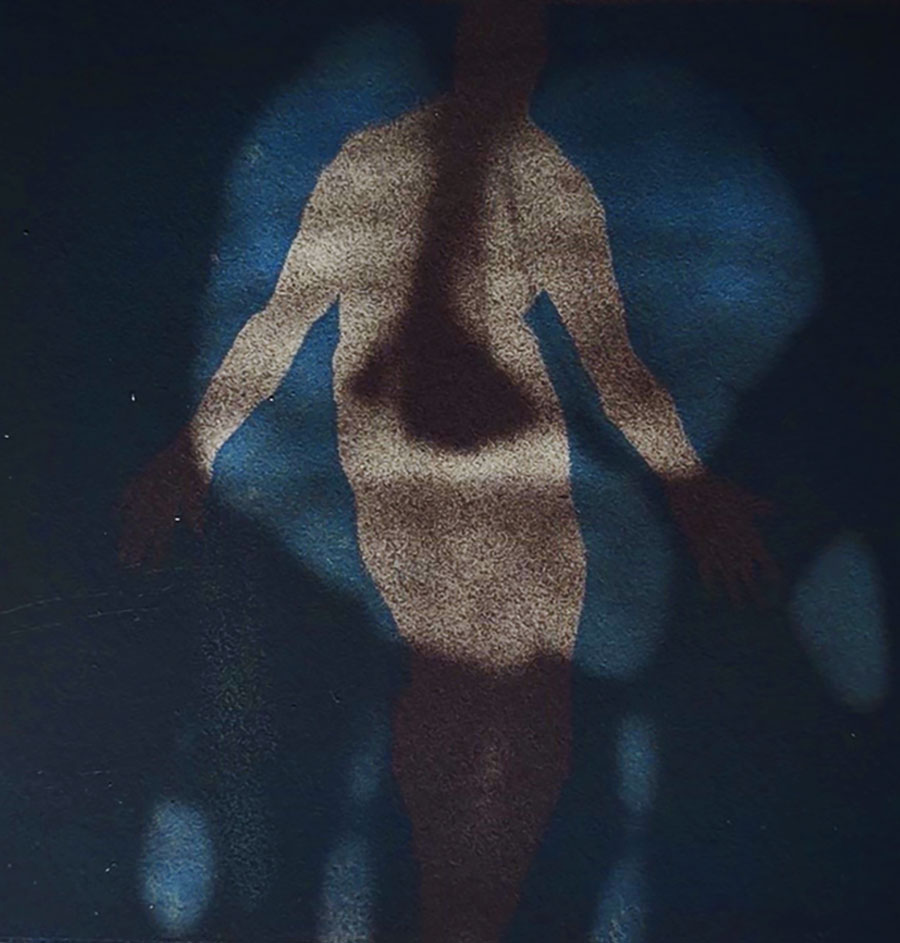
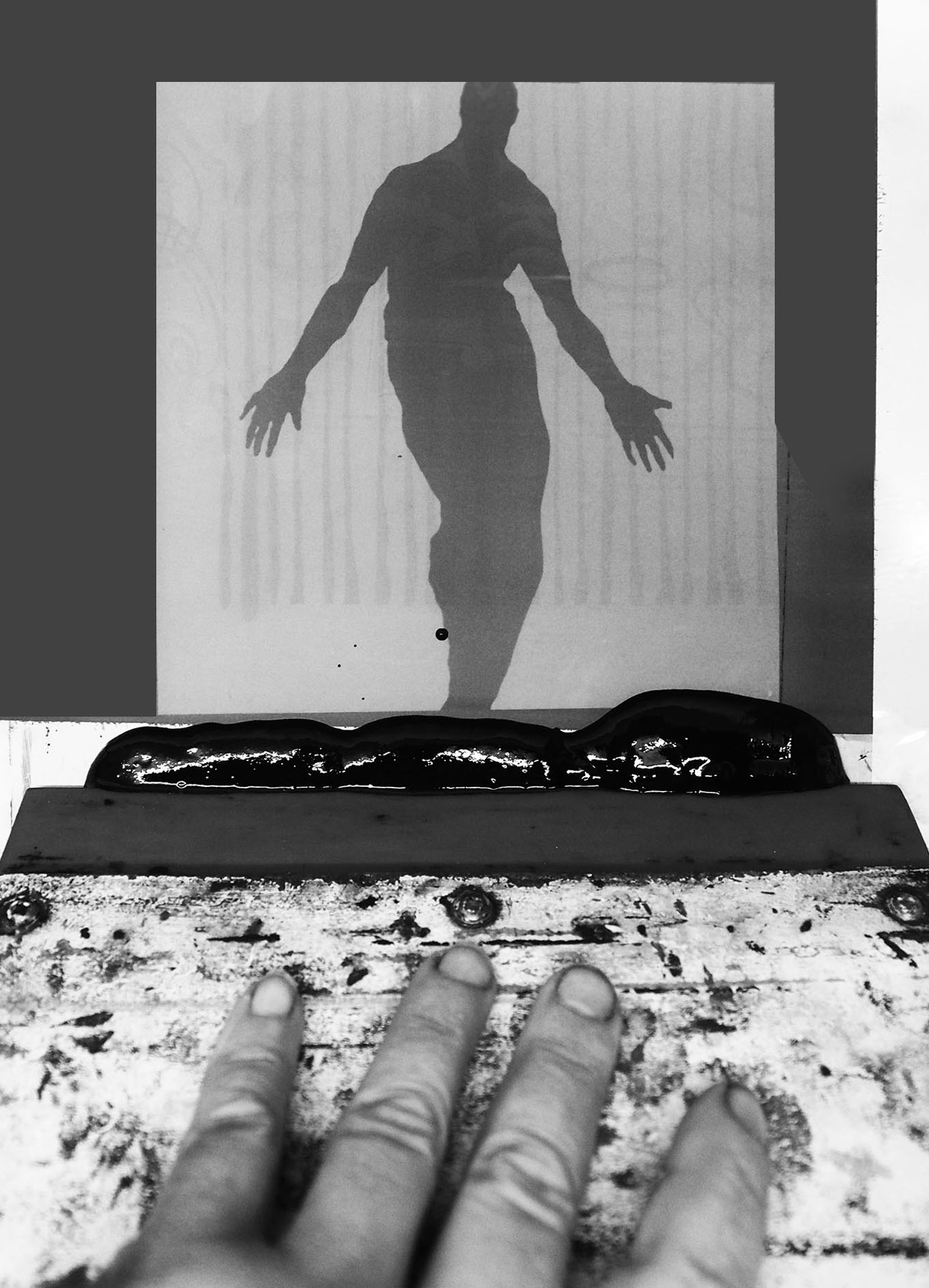
Eight matrices built the visual architecture: six variations on horizontal lines — black, blue, red — accumulated in overprint across every page, the syncopated ground that carries the duration. Two human silhouettes, positive and negative — because we look for the semblance of another to see ourselves better. The figure absorbs and refracts. It surfaces through the noise and dissolves back into it.
A thermochromic layer reads as black on the surface and erases itself under the warmth of a hand — revealing what was underneath. The book is unmade by being held.
The object is singular. What it holds can’t be downloaded. Encounter it at the degree show, 30 June – 5 July, CSM Granary Building, London, and in Venice, September 2026.
Animations
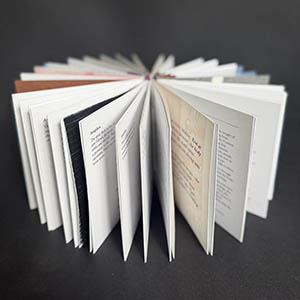
The Animations of the Print Vigil
+
The Pressmarks Lexicon
The same event, in language. The Animations of the Print Vigil unfold through the canonical hours — Vigil to Compline — the prose shifting with the hours, precise at the opening, loosening by Vespers as the body’s grip on formal structure softens with the night. The Pressmarks Lexicon names what the discipline knew before the philosophy arrived: eight working terms — Pressure, Pull, Impression, Registration, Overprint, Proof, Reveal, State — each one a site where practice and philosophy were never separated.
Arrived at alongside the codex. Held in a different form. Evidence of a different order.
Archive
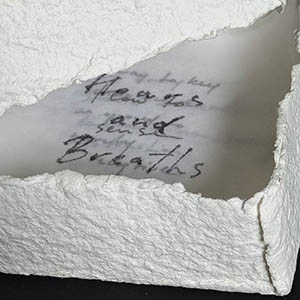
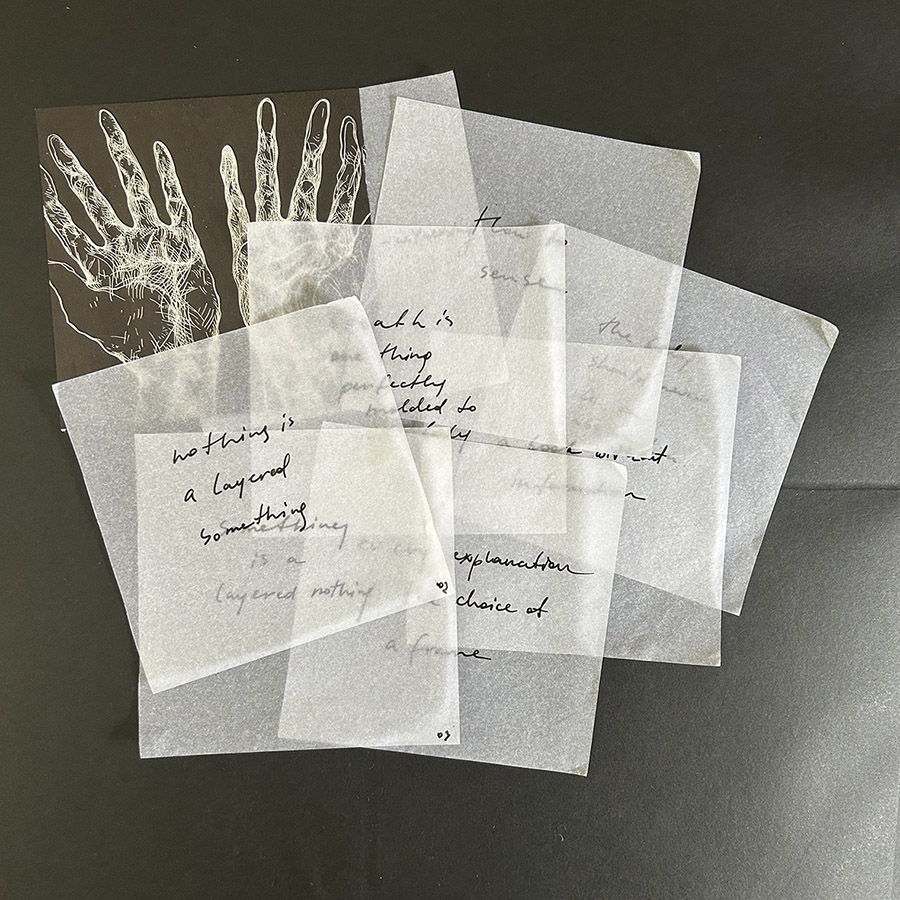
The inner life of the studio. The archive box is built from the materials discarded in making the codex — the offcuts, the failed pulls, the spent substrate returning as container. Inside: studio sketchbook thoughts copied by hand, photography from the vigil, the material record of what the other three components couldn’t carry.
Not illustration. Not evidence in the institutional sense. The residue of twenty-four hours held in the register only the studio knows — what was thought before it was argued, what was felt before it was named.
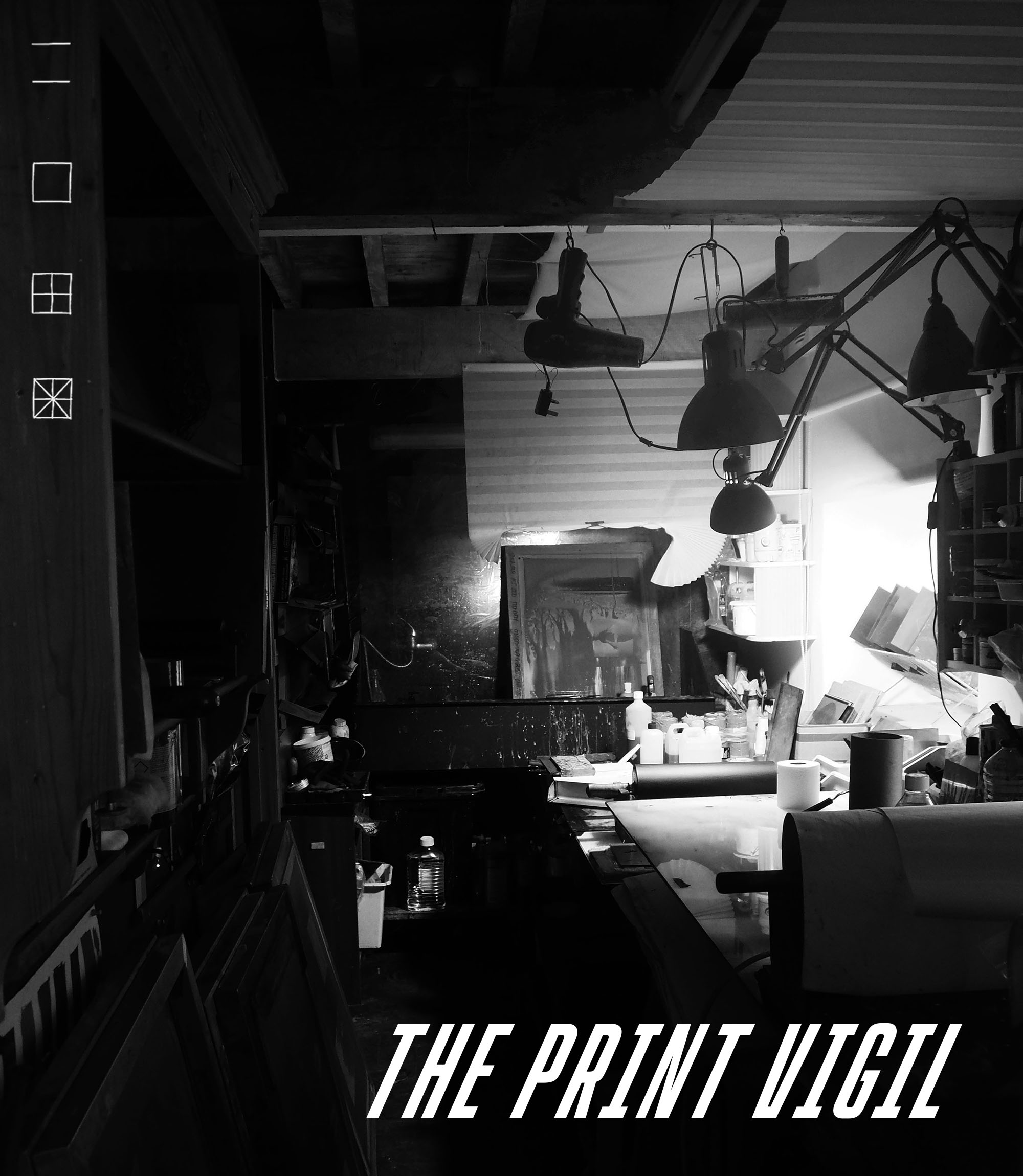
The Vigil. Twenty-four hours at the press. This is that.
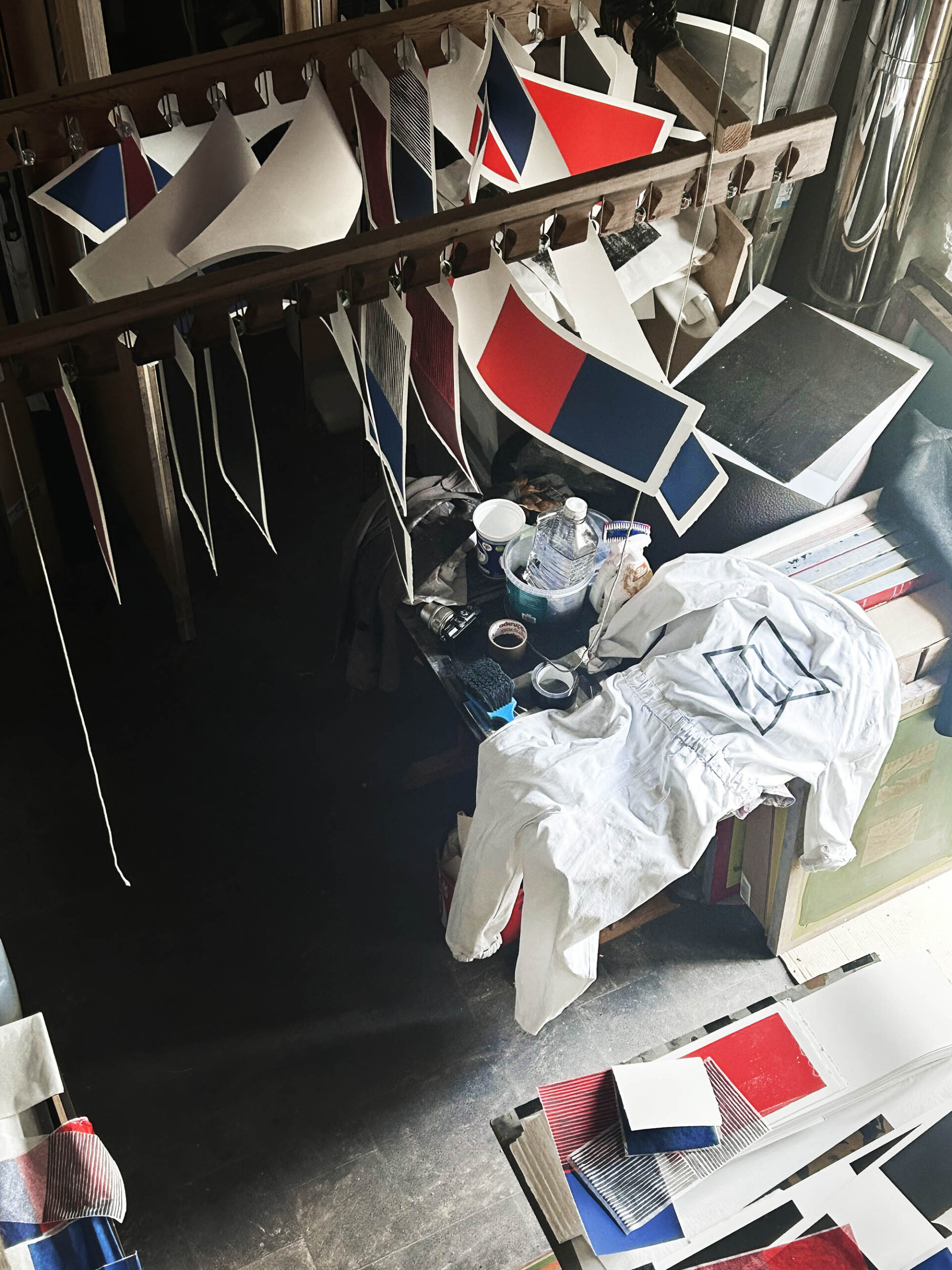
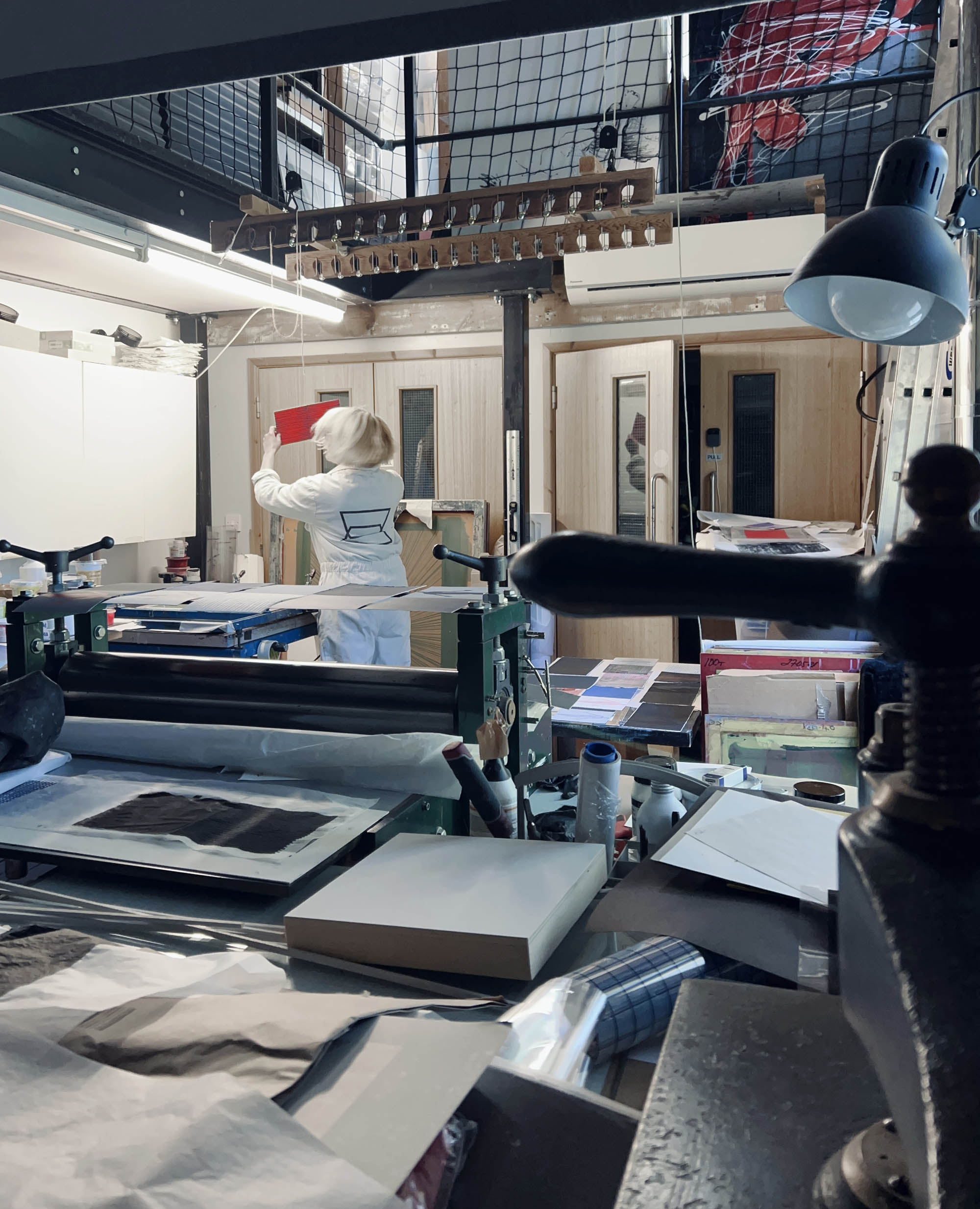
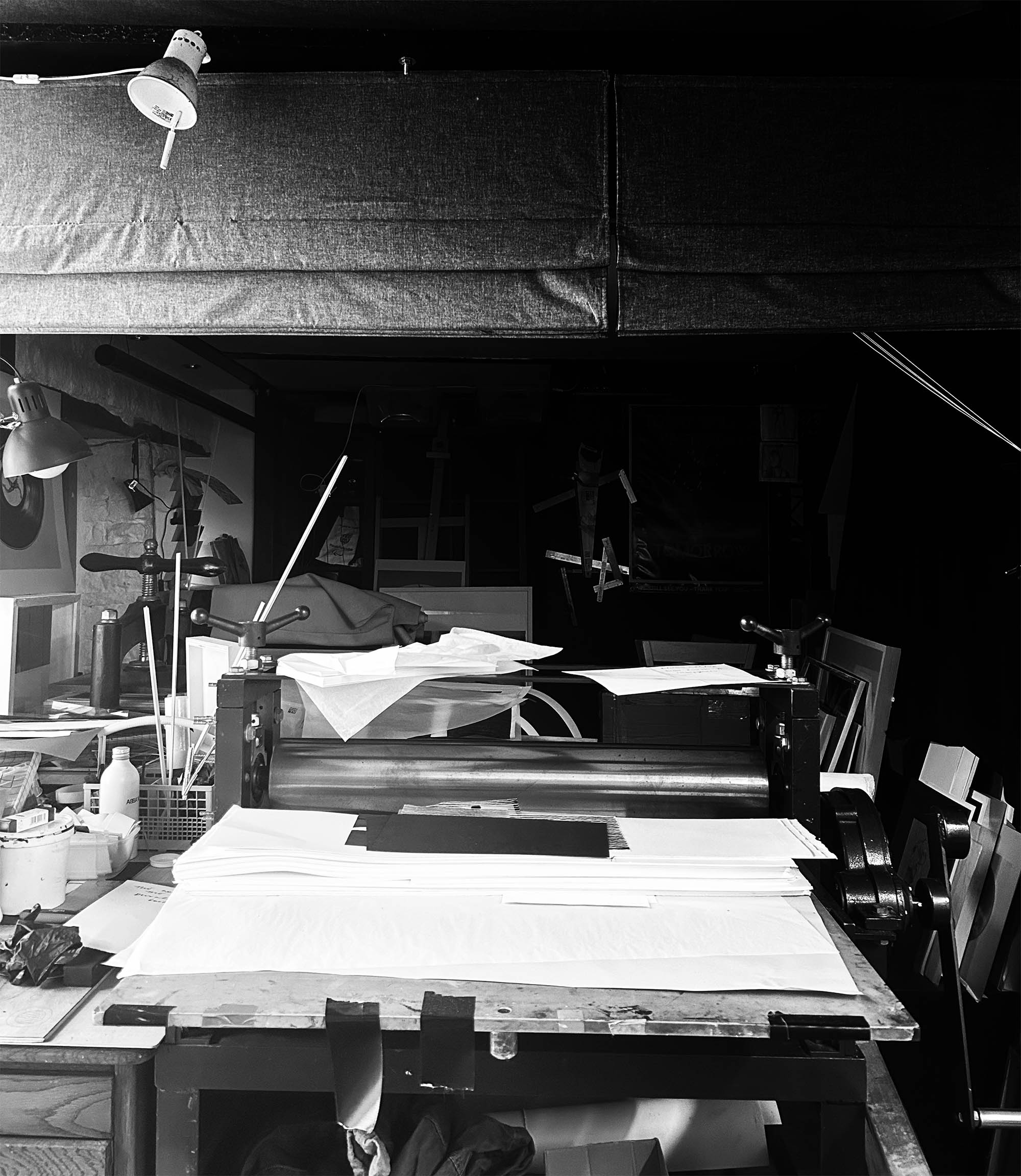
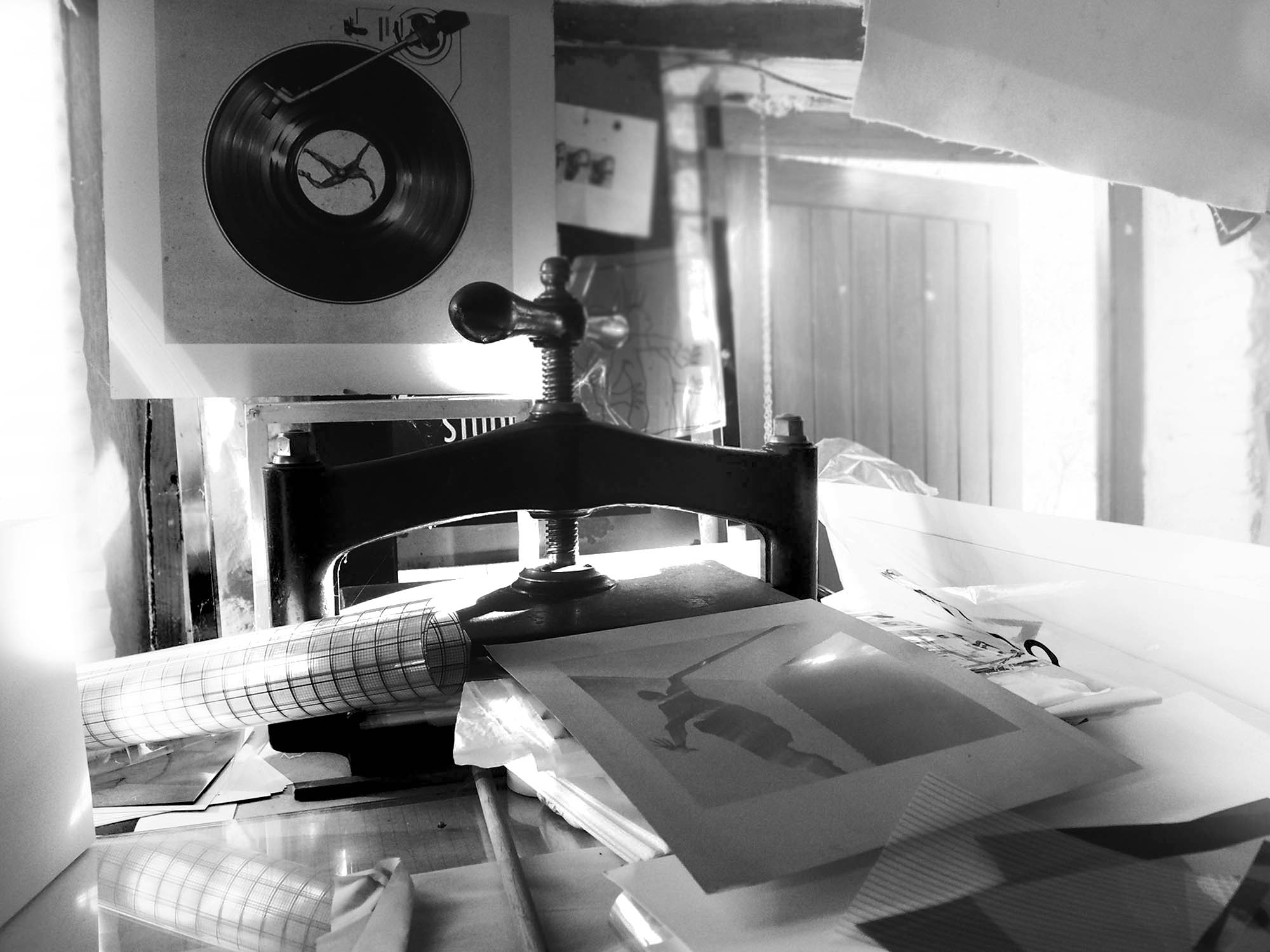
The press is cold. The studio at midnight holds a particular kind of silence — not peaceful, not hostile, simply indifferent to the body that has just entered it. The first thing: turn the lights on.
Everything is already there. The matrices and screens stacked, the ink waiting, the paper anticipating the hours ahead. The studio doesn’t need you to begin. It begins when you do.
The early pulls are careful. The body is still governing the press — testing pressure, reading the ink, finding the rhythm. There is a geometry to this hour. Exact, repeatable. The work proceeds by checking itself.
Rest is part of the structure. Coffee, writing, sitting, sleeping when the body asked for it. Breathing differently — not the held breath of the pull, but the slower breath of a body that has set the work down and is letting it continue without it. The studio keeps moving. The ink dries. The layers settle.
By midday the world outside is fully alive and you are already halfway down the river. There is no bank to swim to. The only way is forward. The pulls come at intervals the materials dictate. The body has stopped consulting itself.
The afternoon is the longest country. The light changes. The ink behaves differently. The registration drifts — not error, record. The wrist carrying what the mind has stopped tracking. Every layer arriving on top of what the body has already spent.
This studio has been a place of work for a long time. The press carries the memory of every previous session. The plates carry their own history of pressure and acid. Twenty-four hours was not a feat performed upon it — it was a conversation the practice had been building toward for years.
By the final hours the boundary between the maker’s breath and the press’s rhythm has dissolved. The marks the body cannot stop making.
I didn’t count the last pull. I said it was the last, so I stopped.
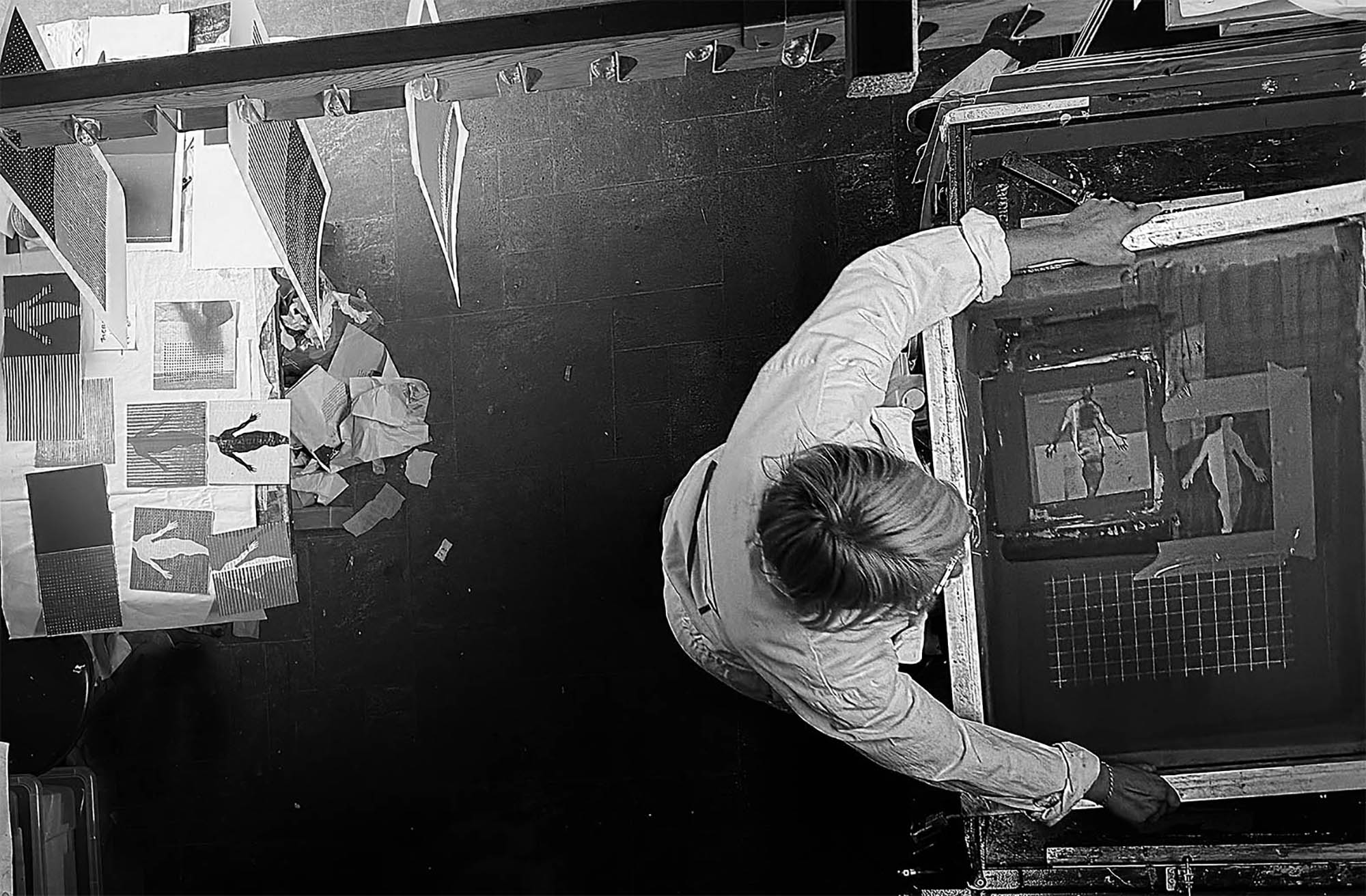
The press held what it was given. The ink dried where it dried. The studio, which had been a single breathing organism for twenty-four hours, became a room again.
The codex carries something that was spent here. Whoever lifts it next will feel it — in the weight, in the grain, in the specific pressure of twenty-four hours settled into paper.
That residue is the offer. It doesn’t require the studio, the years, the vigil. It requires only a pair of hands and the willingness to feel the weight before reading the surface.
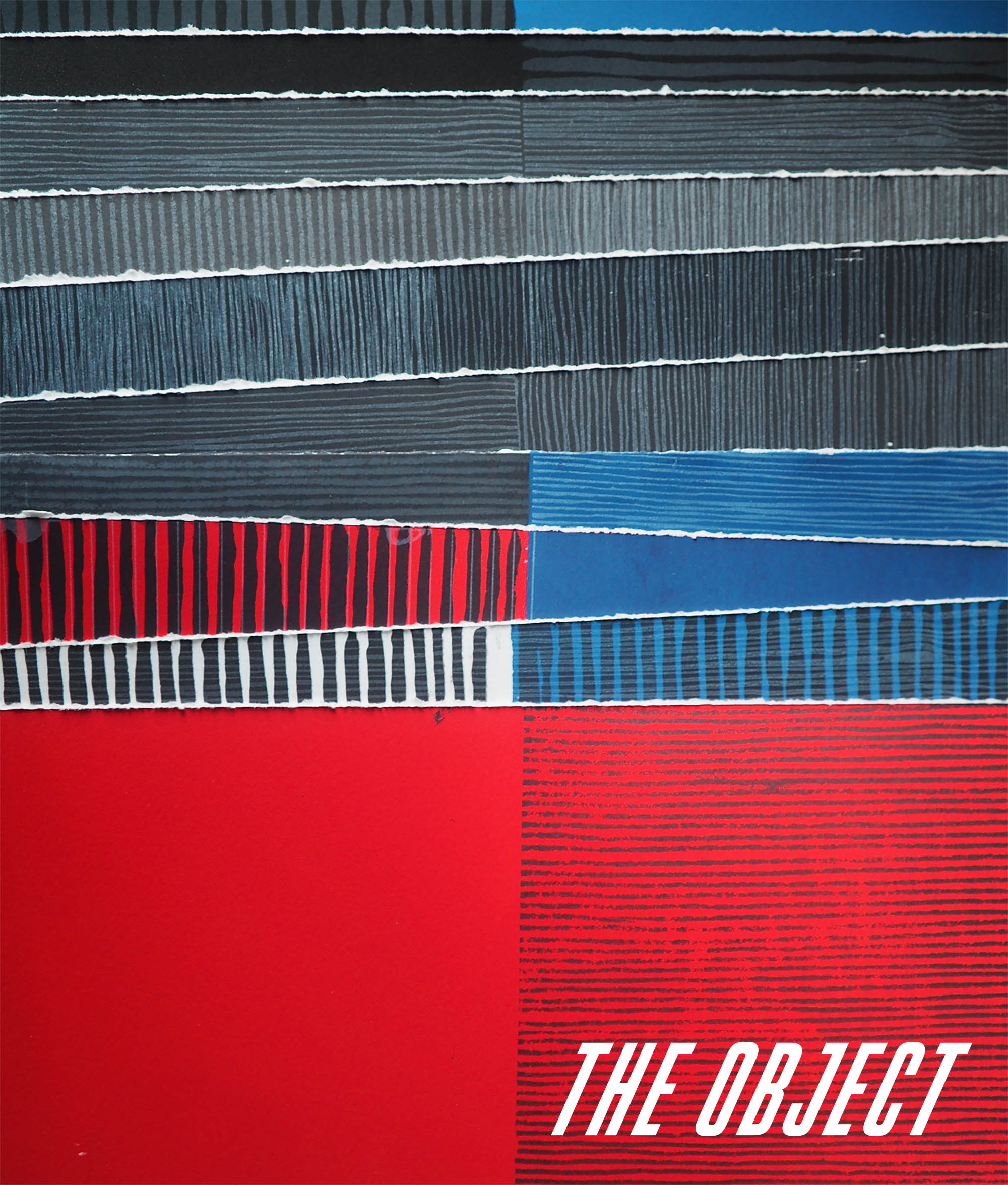
The Artist Book.
The book measures 15 × 15 × 4.5 cm = 1000 ml
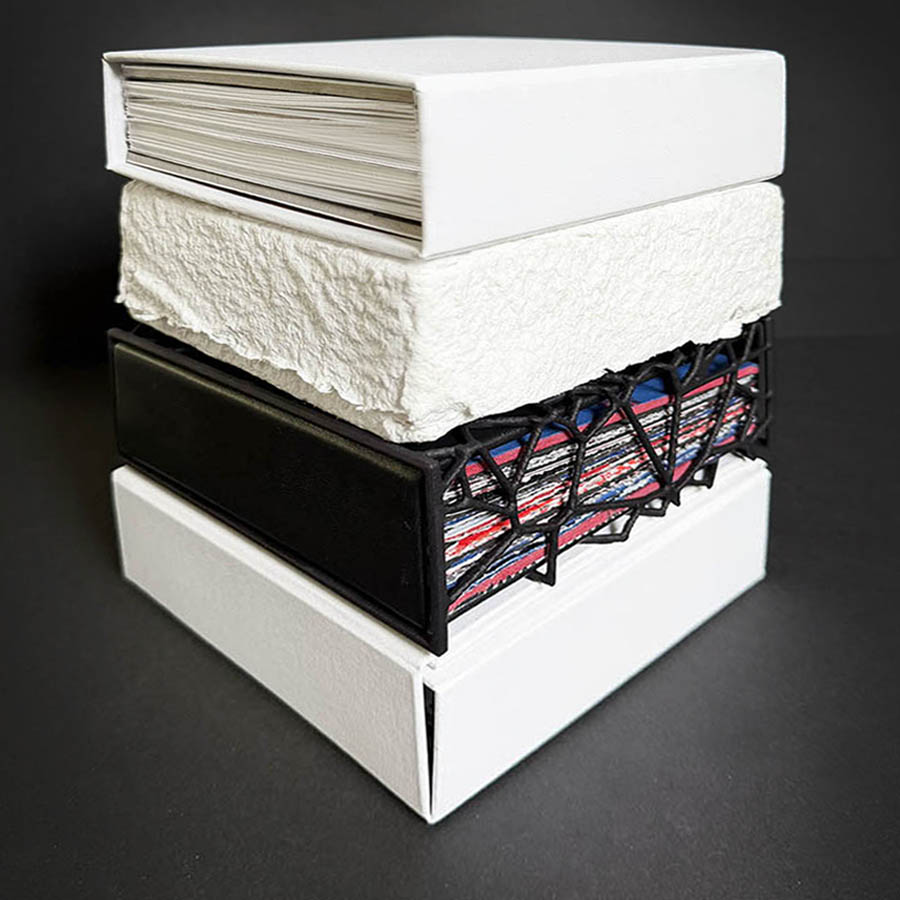
Three papers carry the print. Somerset cotton rag — western, resistant, receiving the ink with its own opinion. Japanese mulberry — translucent, absorbing rather than receiving, holding the ink differently into its body. And a third paper made in the studio from the cotton offcuts of the project itself — the trimmed edges processed back into substrate, the vigil consuming itself and returning as the surface of its own record.
The palette is eight: algae black, ultramarine, vermillion, titanium white, and four greys. Living or once-living things carry the dark. Ultramarine carries the threshold — the blue of the hour between darkness and day, which is why it has always carried devotional weight. Vermillion acts directly on the eye and demands response. Old inks, forged under extreme heat, arriving with centuries of pressure and devotion in their chemistry.
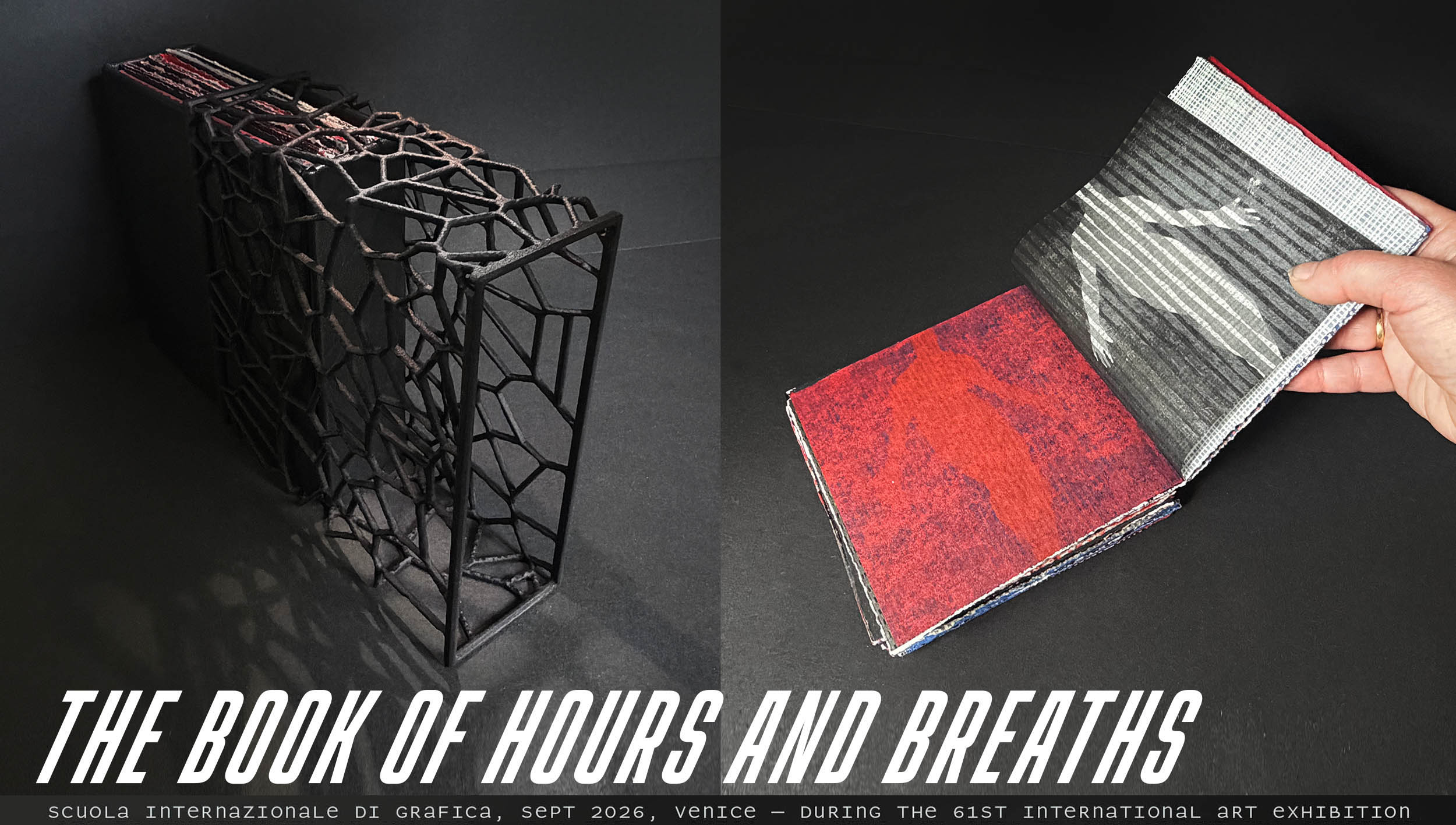
Certain pages carry a thermochromic layer — screen-printed on top of the colour beneath, invisible until touched. On contact with the warmth of a hand it erases itself, revealing what was underneath. The first time, it is a surprise. After that, the body looks for it. The book is unmade by being held.
The binding is Coptic — eight folios, stitched and exposed, the spine visible, nothing hidden about how the book is held together. It lies fully flat when open. The cover is black leather. The black that withholds.
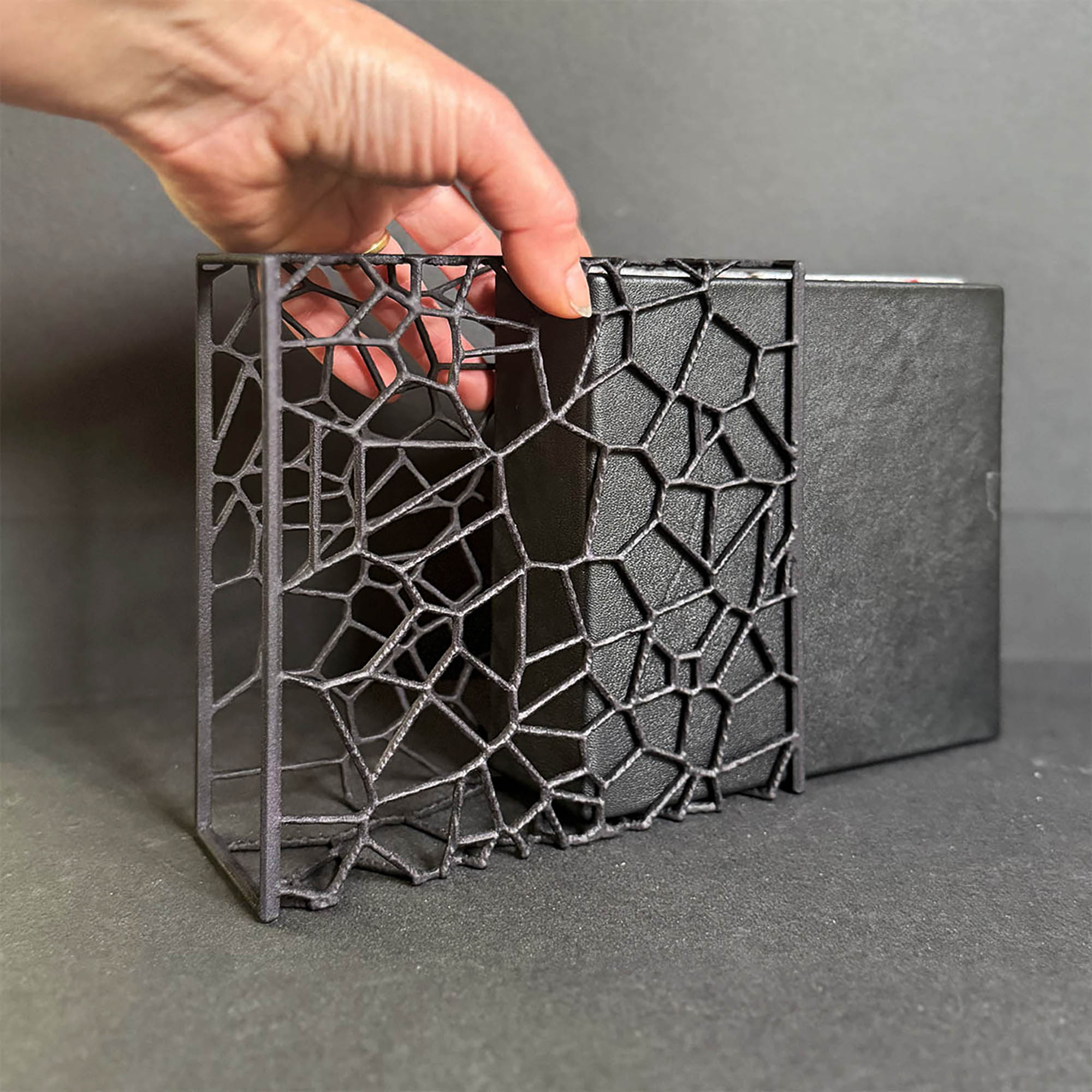
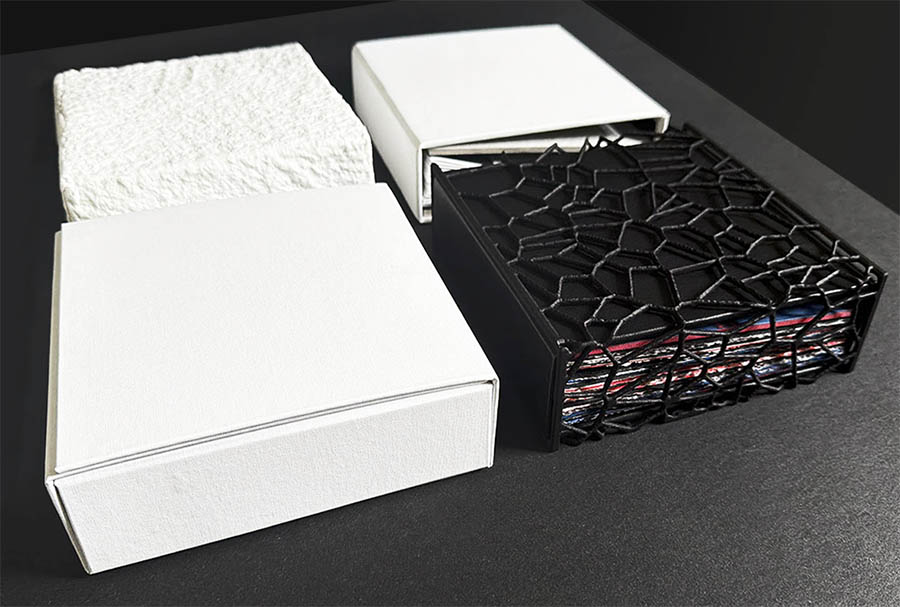
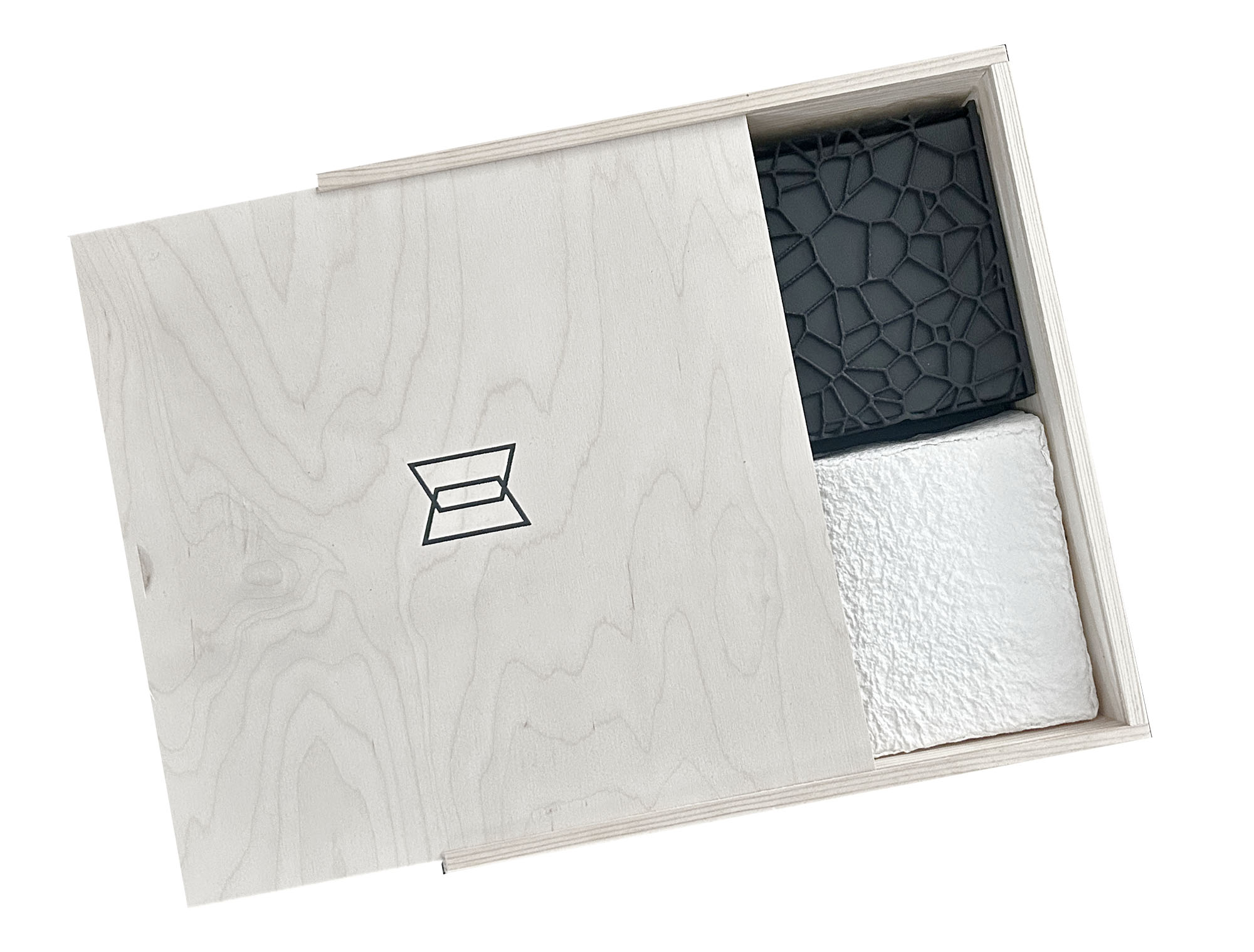
The case is 3D-printed carbon, built by Multi Jet Fusion — powdered material fused by heat, layer by layer, into a Voronoi structure: the geometry matter arrives at when it needs to distribute load across a surface while minimising material. The pattern of bone, foam, the cells of a leaf. Simultaneously strong, light, and porous.
When the book is inside it, the case is a container. When the book is removed, place a light source inside — the case becomes a lantern, casting the Voronoi geometry across the room. Body enclosing body.
Light where the book was.
Meet the artist / see the project:
MRes Art: Theory and Philosophy post-graduate degree show
Central Saint Martins College, UAL
1 – 4 July: 12-8pm | 5 July: 12-6pm
TICKETS : https://www.arts.ac.uk/whats-on/csm-shows-2026-postgraduate-art
The Second Vigil
12 July 2026
The vigil repeats — different this time.
The first vigil was private. One body, one studio, the work building in the particular silence that comes from being unwatched. The second is public: twenty-four hours at the press, streamed live. The event in real time, the presence of whoever is watching folding into the event itself.
The watcher changes what is watched. That is the argument made live.
Instagram/vetagorner
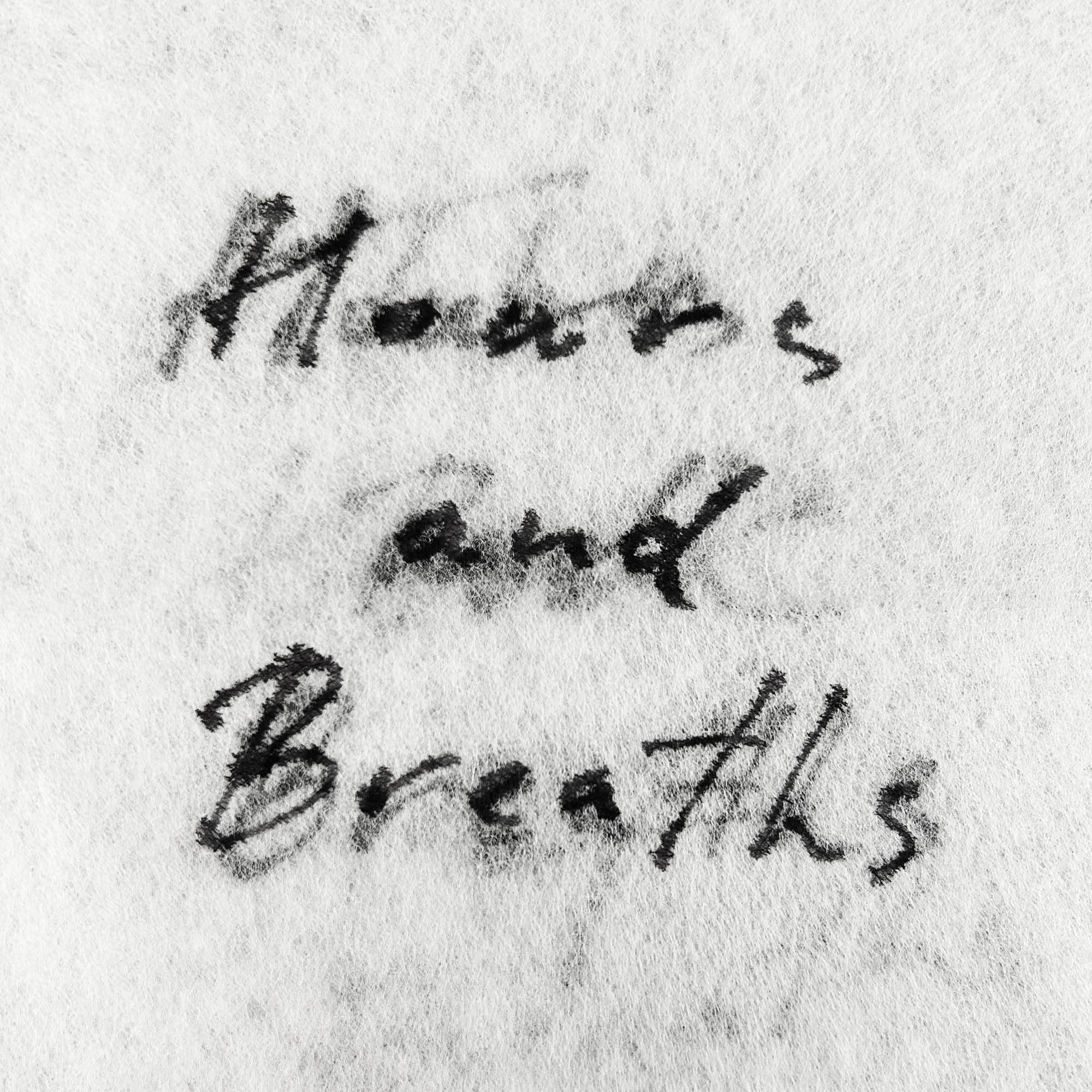
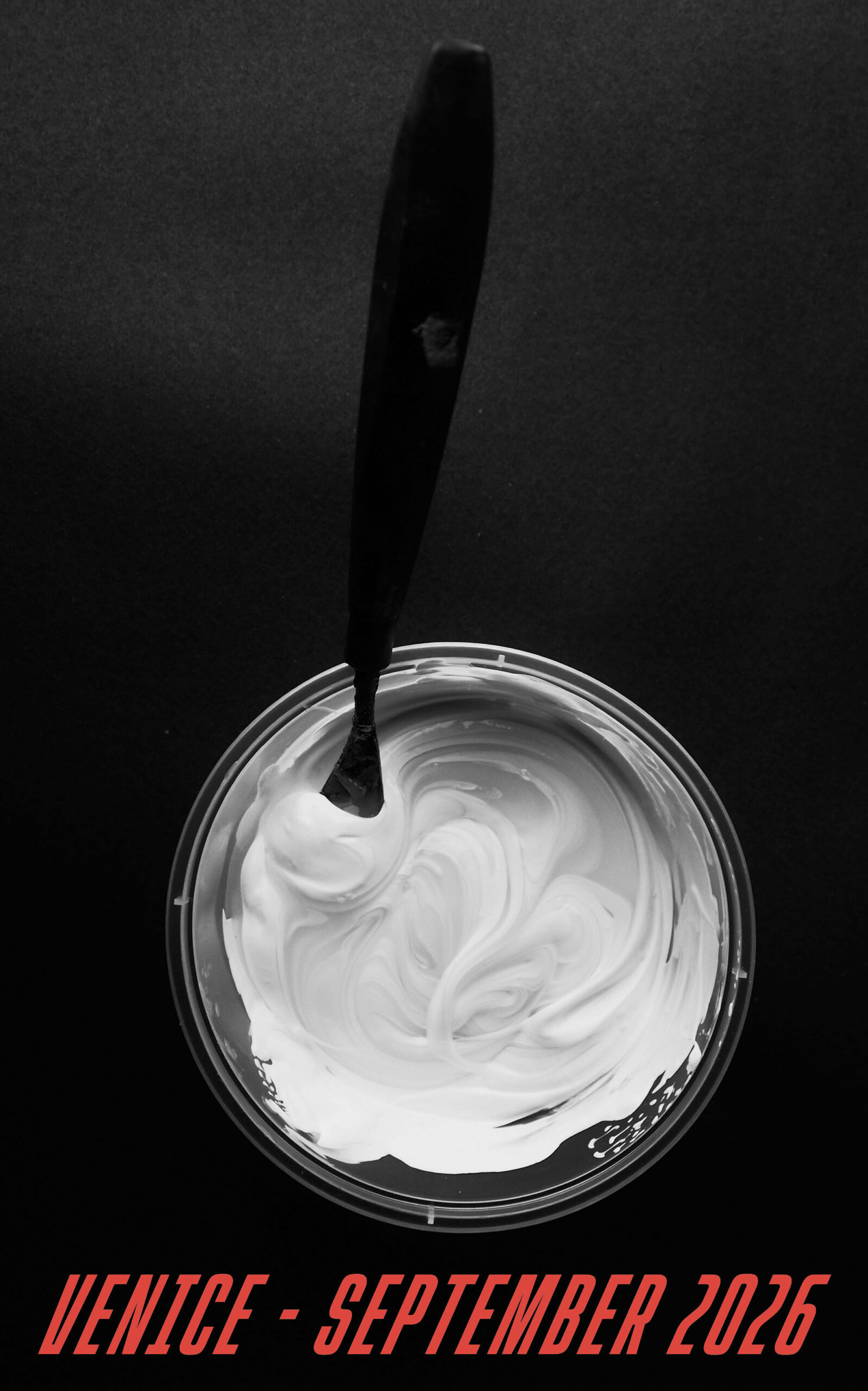
In September 2026, during the 61st International Art Exhibition — In Minor Keys — The Book of Hours and Breaths moves from the singular studio into a living teaching space at the Scuola Internazionale di Grafica, Venice.
The press continues its labour. Other bodies learn what devotion to ink and paper actually costs, and what it generates. The research extends into the question of cultural impact — what happens when this practice meets other histories, other hands, other ways of understanding what making is for.
And a new codex will be made. The Venice Book of Hours and Breaths — different and true to its context. The material presence still standing above the water. The argument doesn’t close. It travels.
Acquire / Collaborate
The handmade codex with Voronoi case. Unique. Conditions of acquisition on enquiry.
The full project — written paper, artist book, Animations, Lexicon, studio archive — available for exhibition, residency, and teaching contexts. Collaboration and future vigil enquiries welcome.